
- Opus 4.7 replaces Opus 4.6 as default across all Claude products and API.
- Image resolution jumps to 3.75 megapixels, 3x previous models.
- New xhigh effort level is now default in Claude Code.
- Redesigned desktop app runs multiple agents in parallel.
/ultrareviewcommand flags bugs and design issues automatically.- Pricing unchanged: $5 per million input, $25 per million output.
Claude Opus 4.7 vs Opus 4.6: What’s New for AI Coding in 2026
Anthropic released Claude Opus 4.7 on April 16, 2026. The model is a direct upgrade to Opus 4.6, with the biggest gains in advanced software engineering. Early-access testers report handing off complex, long-running coding work — the best AI coding model for autonomous tasks that previously required close supervision.
Opus 4.7 follows instructions more literally than its predecessor. Anthropic warns that prompts written for earlier models may produce unexpected results — where previous versions interpreted instructions loosely, Opus 4.7 takes them at face value. The company published a migration guide for developers upgrading from Opus 4.6 to Opus 4.7. Anthropic had already made headlines with Claude Mythos Preview and Project Glasswing just days earlier.
Anthropic Opus 4.7 Image Resolution: 3x More Detail for Vision Tasks
The model accepts images up to 2,576 pixels on the long edge — roughly 3.75 megapixels, more than three times prior Claude models. That opens new multimodal AI use cases requiring fine visual detail: dense screenshots for computer-use agents, complex diagram extraction, and pixel-perfect UI references.
Opus 4.7 also produces higher-quality interfaces, slides, and documents from visual inputs. An updated tokenizer means the same input can map to 1.0–1.35x more tokens depending on content type, but Anthropic says the net result is favorable on internal coding evaluations. For developers comparing ChatGPT vs Claude in 2026, the vision gap just widened.
Claude Code Desktop App 2026: Auto Mode, Parallel Agents, and /ultrareview
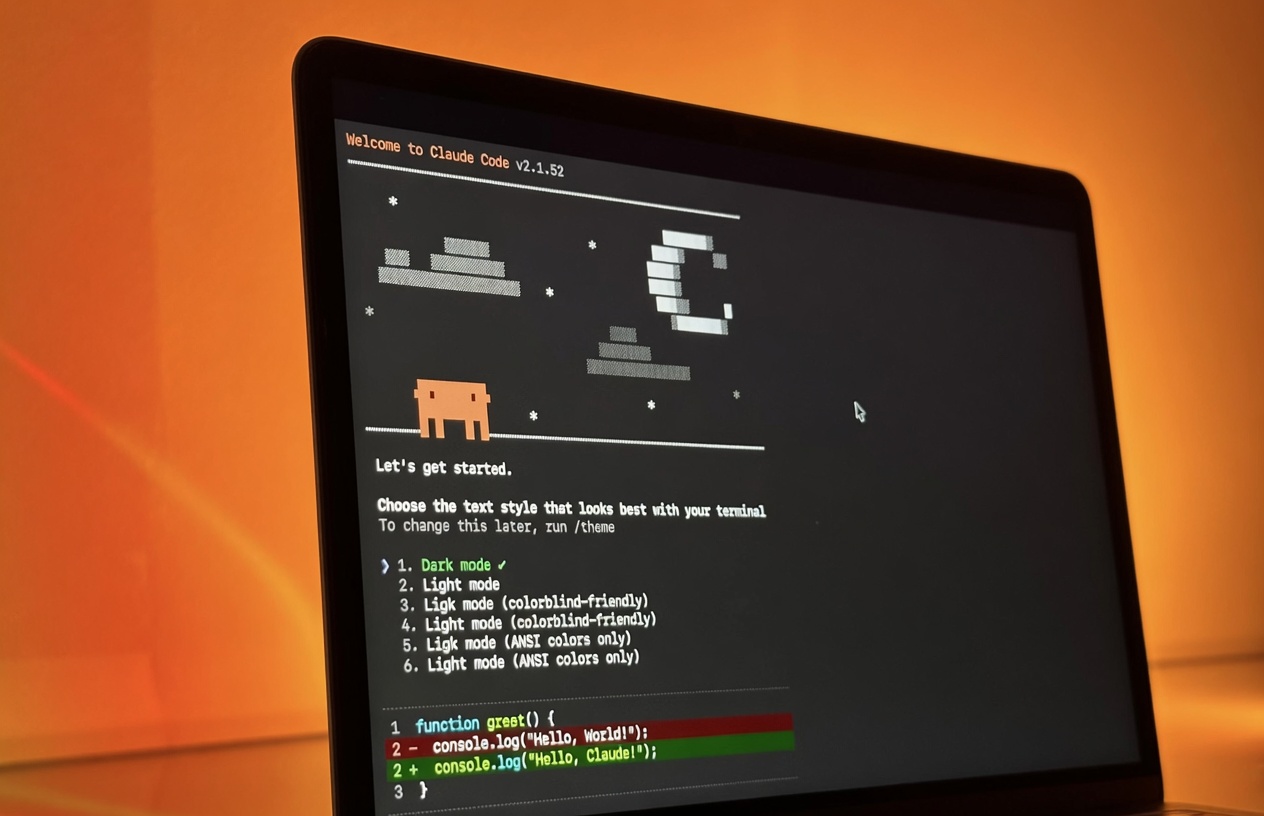
Claude Code ships with a redesigned desktop app supporting multiple parallel agents, an integrated terminal, in-app file editing, and a faster diff viewer. The new /ultrareview command flags bugs and design issues automatically — a built-in AI code review tool for developers. Auto mode, which lets Claude handle permission decisions via classifiers, is now available to Max users.
On the platform side, a new xhigh effort level slots between high and max, giving finer control over the reasoning-latency tradeoff. Task budgets enter public beta, letting developers cap Claude API token spend across long runs. The model is available on the Claude API, Amazon Bedrock, Google Cloud Vertex AI, and Microsoft Foundry. Claude’s recent momentum — including overtaking ChatGPT in US App Store downloads — suggests Anthropic is not slowing down.
Anthropic Opus 4.7 Pricing, Cybersecurity Safeguards, and Mythos Preview
The model ships with new safeguards that automatically detect and block high-risk cybersecurity requests — part of Anthropic’s Project Glasswing initiative. Security professionals can apply to a Cyber Verification Program for legitimate penetration testing and red-teaming.
Opus 4.7 is not Anthropic’s most powerful model — that title belongs to Claude Mythos Preview, still in limited release. But for production workloads at $5 per million input tokens and $25 per million output tokens, Opus 4.7 is the best Claude model for developers in 2026.