
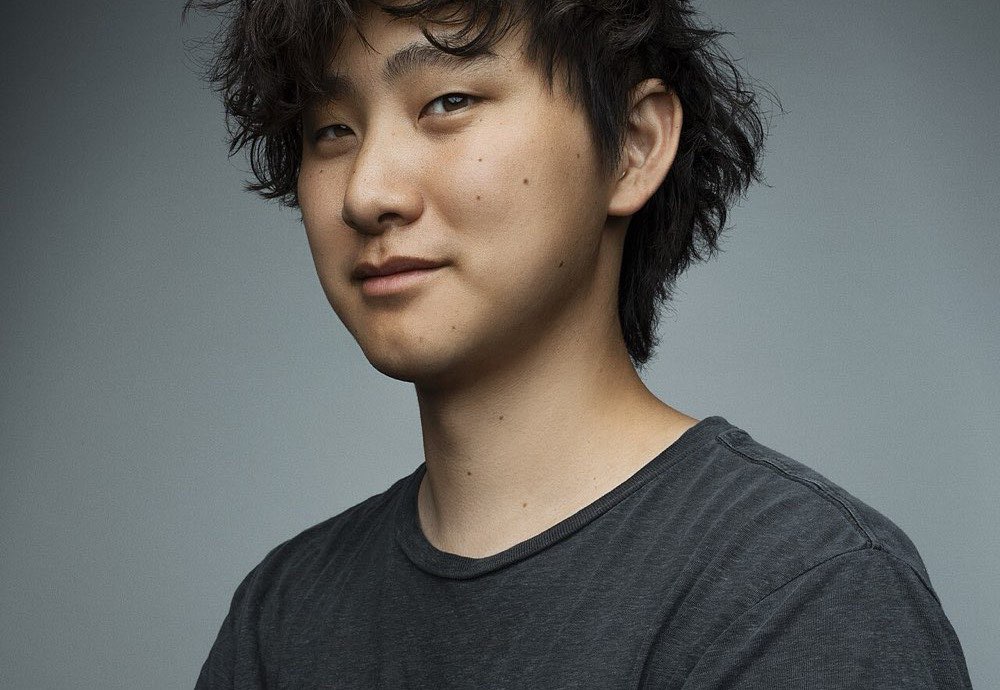
- Scale AI reached a $14 billion valuation in 2024 and generated $870 million in revenue, with projections to surpass $2 billion in 2025.
- Alexandr Wang became the world’s youngest self-made billionaire at 25, with a net worth estimated at $3.6 billion as of 2025.
- Scale AI secured the Pentagon’s flagship Thunderforge contract in March 2025, deploying AI agents for U.S. military planning and operations.
- In June 2025, Meta acquired a 49% stake in Scale AI for $14.3 billion, and Wang moved to lead Meta’s Superintelligence Labs as Chief AI Officer.
Scale AI Powers the Machine Behind Every Major AI Model
Every large language model needs data before it can think. Scale AI — the San Francisco-based company that labels, curates, and evaluates that data — has become the invisible backbone of the AI industry. OpenAI, Meta, Microsoft, the U.S. Department of Defense: they all depend on Scale’s infrastructure to turn raw information into training-ready datasets.
The company hit $870 million in revenue in 2024 and was on track to double that figure in 2025. Its $14 billion valuation, secured in a Series F round led by Accel with participation from Amazon and Meta, placed it among the most valuable private AI companies in the world. Behind it all stands Alexandr Wang — a 28-year-old CEO who dropped out of college before he could legally drink, built a data empire from a Y Combinator batch, and became the youngest self-made billionaire in history at 25.
A Childhood Shaped by Nuclear Physics in New Mexico
Wang was born in January 1997 in Los Alamos, New Mexico — a town that exists because of the Manhattan Project. Both his parents were Chinese immigrants who worked as physicists at Los Alamos National Laboratory. His mother specialized in plasma physics and fluid dynamics, fields directly relevant to nuclear weapons research. Science was the family language.
Wang gravitated toward math and computer science early. By middle school, he entered the MATHCOUNTS competition — motivated, he later admitted, by the prospect of a trip to Disney World. That first taste of competitive problem-solving led to the USA Mathematical Olympiad, where he ranked among the top 30 nationally, and the USA Computing Olympiad, where he was a finalist in both 2012 and 2013. Los Alamos High School was a launchpad, not a destination.
From Quora Intern to MIT Dropout at 19
Before even setting foot on a college campus, Wang took a gap year and moved to Silicon Valley. At 17, he landed a job as a software engineer at Quora, the Q&A platform. It was a formative experience — not just technically, but personally. At Quora, he met Lucy Guo, a product designer who would become his co-founder.
Wang enrolled at MIT to study mathematics and computer science. He lasted one year. The pull of building something real was stronger than the pull of a diploma. In the summer of 2016, at 19, he dropped out to start Scale AI with Guo. They were the youngest team in their Y Combinator batch.
”There’s a huge premium to naivete. When you’re 19, you don’t know what you can’t do — so you just try everything.” — Alexandr Wang
A Fridge Camera, a Failed Experiment, and a $14 Billion Idea
The origin story is almost absurdly mundane. Wang wanted to figure out which of his roommates was stealing his food. He installed a camera on the fridge and tried to build an AI model to analyze the footage. The project failed — there was simply too much raw video data to process without proper labeling.
That failure crystallized a problem Wang saw everywhere in AI: models are only as good as the data they train on, and most companies had no reliable way to label that data at scale. Self-driving car companies were drowning in sensor footage. Computer vision startups couldn’t annotate images fast enough. Wang and Guo pitched a solution: a platform that combined human annotators with machine learning to label data faster, cheaper, and more accurately than anyone else. Y Combinator gave them $120,000. They were 19 years old.
$120,000 From Y Combinator, Then Toyota and Lyft Came Calling
Scale’s first vertical was autonomous vehicles — the perfect beachhead market. The founders went booth to booth at the 2016 CVPR conference with laptops and demos, pitching their labeling platform to anyone who would listen. Toyota Research Institute signed on. Then Lyft. Then GM’s Cruise division, Zoox, and Nuro. Within two years, Scale had become the default data infrastructure for most of the self-driving industry.
By 2021, the company’s valuation hit $7.3 billion, giving Wang — who owned 15% of the company — a net worth that crossed $1 billion. At 24, he became the youngest self-made billionaire in the world. But Wang was already looking past autonomous vehicles. The real opportunity was bigger: every AI model, in every industry, needed labeled data. Scale expanded into natural language processing, content moderation, and government intelligence — and the growth accelerated.
From Self-Driving Cars to the Pentagon’s AI Backbone
Scale’s trajectory from autonomous vehicle data labeling to national security infrastructure happened faster than anyone predicted. By 2022, the company had secured a $249 million blanket purchase agreement with the Department of Defense’s Joint Artificial Intelligence Center. In August 2023, the Chief Digital and Artificial Intelligence Office awarded Scale an agreement to provide its Data Engine for curating and annotating multimodal military data.
Then came Thunderforge. In March 2025, the Pentagon named Scale AI the prime contractor for its flagship program to deploy AI agents in military planning and operations, initially focused on the Indo-Pacific and Europe. Anduril — the defense tech company led by Palmer Luckey — and Microsoft signed on as partners. Wang framed the work in deeply personal terms.
”Knowing the history of the place where I grew up, and the impact that Los Alamos and the Manhattan Project has had on the global order — it felt so clear that great AI technology was going to need to be applied to the national security problem set. We have a moral imperative to support it.” — Alexandr Wang
The stance put Wang at odds with much of Silicon Valley, where defense contracts remain controversial. He didn’t flinch. A visit to China, where he watched AI companies building facial recognition and surveillance tools for the state, had only hardened his conviction.
The Data Arms Race Is Just Getting Started
By mid-2025, Scale AI’s story entered a new chapter. Meta acquired a 49% non-voting stake for $14.3 billion, and Wang stepped down as CEO to lead Meta’s newly formed Superintelligence Labs as Chief AI Officer. Jason Droege, Scale’s chief strategy officer and former Uber executive, took over as CEO. Wang remained on Scale’s board.
The move reflected a broader truth Wang had been preaching for years: data is the real bottleneck in the AI race, not compute. “The United States is going to need a huge amount of computational capacity, a huge amount of infrastructure,” he told CNBC in January 2025. He warned that China’s DeepSeek had released models on par with the best American systems, calling the open-source release “earth-shattering.” The Pentagon later designated Anthropic a supply chain risk, underscoring the growing entanglement of AI and national security.
”If you’re not overdoing it, you’re underdoing it.” — Alexandr Wang
From a fridge camera in a college dorm to the Pentagon’s AI war room, from a $120,000 Y Combinator check to a $14 billion valuation — Wang’s arc is less a rags-to-riches story than a proof of concept. The kid from Los Alamos bet that data would become the most valuable commodity in AI. He was right. Now, at 28, he’s building the tools for what comes next.