
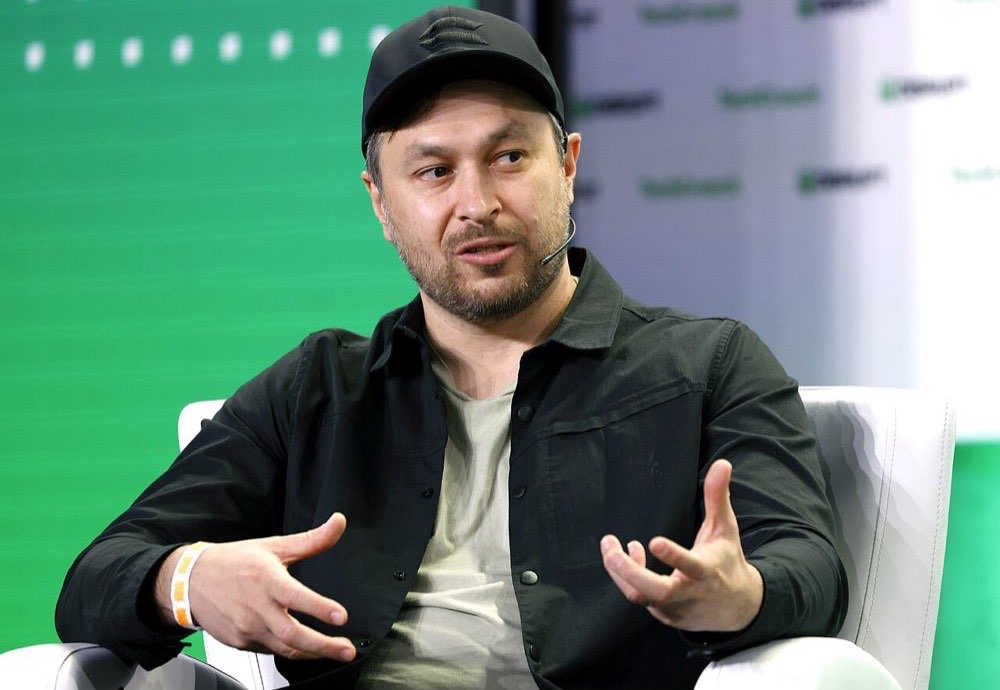
- Solana processes over 4,000 transactions per second with fees averaging $0.00025, making it the fastest major Layer-1 blockchain in production.
- Anatoly Yakovenko spent 12 years at Qualcomm as a senior staff engineer before inventing Proof of History, the consensus mechanism that powers Solana.
- Solana Labs raised $374 million across six funding rounds, including a $314 million round led by Andreessen Horowitz in 2021.
- The SOL token crashed below $8 after the FTX collapse in 2022 — and recovered to trade above $130 by 2025, one of crypto’s greatest comebacks.
250 Billion Transactions and a Network That Refuses to Slow Down
Solana has processed over 250 billion transactions since its launch in March 2020. The network sustains 2,000 to 4,000 transactions per second in normal conditions, with stress tests pushing above 100,000 TPS. Average fees sit at $0.00025 — roughly ten thousand times cheaper than Ethereum. The DeFi ecosystem holds over $9.3 billion in total value locked, with Jupiter alone accounting for $1 trillion in DEX volume.
Behind this infrastructure is Anatoly Yakovenko, a 44-year-old Ukrainian-born engineer who spent more than a decade building operating systems at Qualcomm before turning his attention to the one system he believed was fundamentally broken: blockchain. His path from embedded systems to crypto’s fastest chain is a story about obsession with speed — and the conviction that time itself could be a data structure.
A Kid From Ukraine Who Fell in Love With Code
Yakovenko was born in 1981 in Ukraine, then still part of the Soviet Union. His family emigrated to the United States in the early 1990s, settling in the Midwest. As a teenager, he taught himself C — not from a class, but from raw curiosity and long nights with a keyboard.
He enrolled at the University of Illinois at Urbana-Champaign, one of the top computer science programs in the country. While still in school, he co-founded Alescere, a VOIP startup that gave him his first taste of building something from scratch. The company did not survive, but the instinct did. He graduated with a bachelor’s degree in computer science in 2003.
12 Years Inside Qualcomm’s Operating Systems
Yakovenko joined Qualcomm straight out of college in 2003. He stayed for nearly 13 years. His work focused on developing the BREW operating system and later leading teams building real-time embedded systems for mobile chipsets. He rose to Senior Staff Engineer Manager — a role that put him at the intersection of hardware constraints and software performance.
The experience shaped everything that came next. At Qualcomm, Yakovenko learned to think in nanoseconds, to optimize systems where every clock cycle mattered. When he later looked at blockchain, he saw a technology crippled by the same problem mobile systems had solved years ago: synchronization.
”The entire blockchain space was stuck on this idea that every node had to agree on the order of events before processing them. I knew from my work on operating systems that time itself could solve that problem.” — Anatoly Yakovenko
Two Coffees, One Beer, and a 4 AM Breakthrough
After leaving Qualcomm in 2016, Yakovenko spent time at Mesosphere working on distributed systems and then at Dropbox working on compression. On the side, he and a friend began mining cryptocurrency to offset the costs of a deep-learning hardware project. That side project pulled him deeper into blockchain — and exposed its fundamental bottleneck.
One night in 2017, Yakovenko sat down at Café Soleil in San Francisco. Two coffees and a beer later, he was still there at 4 AM, scribbling through a problem that had been gnawing at him for weeks. The breakthrough: the passage of time itself could be used as a data structure to order transactions on a blockchain. No waiting for consensus. No coordinating clocks across nodes. Just a cryptographic proof that one event happened before another. He called it Proof of History.
He published a whitepaper in November 2017. Within weeks, he recruited Greg Fitzgerald and Stephen Akridge — both former Qualcomm colleagues — to build it.
From Whitepaper to Mainnet: Solana Labs Takes Shape
Yakovenko formally founded Solana Labs in 2018 in San Francisco. The name came from Solana Beach, a surfing town near San Diego where he and his co-founders had spent time while at Qualcomm. Early funding was modest — a seed round in April 2018, followed by a $20 million Series A in 2019.
The team spent over two years building before launching the mainnet beta in March 2020 — right as COVID-19 shut down the world. The timing was terrible for most startups. For a blockchain promising speed and low cost, it turned out to be perfect. DeFi was exploding, and Ethereum’s gas fees were pricing out smaller users.
”If you are a back-office finance person, you actually get crypto much, much faster. The technology makes sense when you see the cost of moving money through the traditional system.” — Anatoly Yakovenko
By June 2021, Solana Labs closed a $314 million round led by Andreessen Horowitz and Polychain Capital. SOL’s price surged past $250 in November 2021. The ecosystem was growing at a pace that even Yakovenko had not anticipated.
The FTX Crater — and the Comeback Nobody Expected
Then came November 2022. FTX, one of Solana’s most prominent backers, collapsed in spectacular fashion — a crisis that also rocked Changpeng Zhao’s Binance empire. The bankrupt exchange held $982 million in SOL tokens. The price cratered from $36 to below $8 in days. Crypto media wrote obituaries. Developers started leaving.
Yakovenko did not panic, but he did not pretend everything was fine either. He was blunt about the damage. The concern was not the token price — it was the startups in the Solana ecosystem that depended on FTX-linked funding and had no runway left.
”I was just shocked. It was really, really weird to reconcile what was happening. But I think in the long term, it’s really good. It ripped the band-aid off.” — Anatoly Yakovenko
The recovery that followed ranks among the most dramatic in crypto history. SOL climbed from $8 to over $130 by late 2024 — a gain north of 1,500%. Network activity surged. The Firedancer validator client, developed by Jump Trading, promised to push throughput even higher. By 2026, Solana’s stablecoin transactions alone exceeded $650 billion.
Quantum Threats, AI Coding, and What Comes Next
Yakovenko’s attention in 2025 and 2026 has split between two frontiers. On the threat side, he warned at the All-In Summit that quantum computers have a “50/50” chance of breaking Bitcoin’s cryptographic protections within five years — a timeline most in the industry consider aggressive but not dismissable. On the opportunity side, he has become one of crypto’s most vocal advocates for AI-assisted development, calling agentic coding “a great force multiplier” and openly using tools like Claude to write production code.
He also predicted that stablecoins — like Jeremy Allaire’s USDC — would reach a $1 trillion market cap by 2026 — a forecast that, given Solana’s role in stablecoin infrastructure, doubles as a bet on his own network. With over 3,200 validators across 45 countries and a TVL approaching $10 billion, Solana is no longer the scrappy Ethereum alternative. It is the blockchain that enterprises, traders, and AI agents are building on.
Yakovenko still codes. That has not changed since he was a teenager in Ukraine teaching himself C. The scale has.