
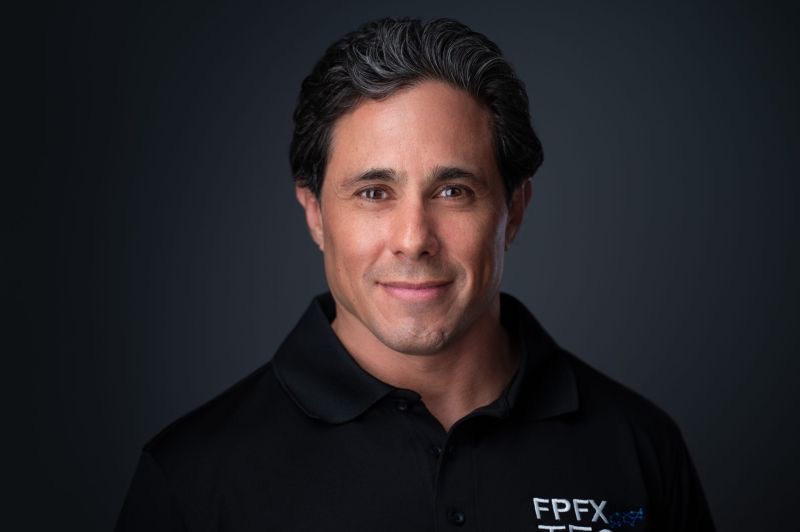
- Crossover Markets operates CROSSx, the first execution-only crypto ECN, processing over $50 billion in notional volume across 12 million trades since launch.
- Brandon Mulvihill spent 18 years in electronic execution and prime brokerage at FXCM and Jefferies before co-founding Crossover Markets in 2022.
- The company raised a $31 million Series B in March 2026 at a $200 million valuation, led by Tradeweb Markets.
- CROSSx supports nearly 100 institutional participants with 1,200+ FIX sessions, 24/7 uptime, and ultra-low latency matching from data centers in London, New York, and Tokyo.
$50 Billion in Trades, Zero Retail Clients
Crossover Markets does not serve retail traders. It does not run flashy ad campaigns or sponsor influencer podcasts. Its product, CROSSx, is an execution-only electronic communication network — a venue where institutional players trade crypto the way they trade currencies and equities: anonymously, at speed, and with the infrastructure they expect from traditional finance.
Since going live, CROSSx has matched over $50 billion in notional trading volume. In October 2025 alone, the platform processed $4.96 billion across 1.39 million trades with 100% uptime. Nearly 100 participants are connected through more than 1,200 independent FIX sessions. The numbers place Crossover Markets among the most serious institutional crypto venues in the world — built by Brandon Mulvihill, a former Wall Street executive who spent two decades mastering market plumbing before deciding crypto needed better pipes.
An Economics Degree and a Front-Row Seat to FX Markets
Mulvihill graduated from the University of California, Davis, in 2003 with a Bachelor of Arts in Economics. Two years later, he joined FXCM, then one of the largest retail FX brokers in the world. He was 24.
Over the next twelve years, Mulvihill rose from the trading floor to the executive suite. He launched FXCM Pro’s wholesale business, built its Prime of Prime offering, distributed the ECN FastMatch, and managed the acquisition of Tradestream — Citibank’s margin FX business. By the time he left in 2017, he had become a Managing Director and Executive Board Member, overseeing one of the industry’s most complex institutional distribution networks.
Five Years at Jefferies, Clearing Hundreds of Thousands of Trades a Day
When Jefferies effectively acquired FXCM’s institutional book in 2017, Mulvihill and his colleague Anthony Mazzarese came with it. Mulvihill took the title of Managing Director and Global Head of FX Prime Brokerage — and proceeded to turn a niche North American business into a global operation.
Under his leadership, the desk cleared hundreds of thousands of trades per day and delivered what Jefferies called the first-ever prime brokerage dark pool of aggregated, short-dated swaps and forwards. Mazzarese ran distribution. Together, they built one of the most respected mid-market FXPB franchises on Wall Street.
”It is still early days in the institutional digital asset space. The DNA of our team is rooted in decades of experience addressing customers looking for institutional-only venues.” — Brandon Mulvihill
Crypto Non-Deliverable Forwards in 2018 Planted the Seed
The idea for Crossover Markets did not arrive in a flash of inspiration. It started as curiosity. In 2018, while still at Jefferies, Mulvihill and Mazzarese began examining crypto non-deliverable forward contracts — derivatives that settle in cash rather than physical delivery. The more they studied digital asset markets, the more obvious the gap became.
Institutional crypto trading in 2018 looked nothing like institutional FX trading. Venues were fragmented, latency was inconsistent, and the infrastructure that banks and hedge funds relied on in every other asset class simply did not exist. The two executives filed the observation away — and kept building Jefferies’ FXPB business until March 2022, when Bloomberg reported that both had departed.
Three Co-Founders, One Matching Engine, and a London Launch
Mulvihill and Mazzarese did not go alone. They recruited Vladislav Rysin, the former CTO of Euronext FX, to build the technology. Together, the three co-founders launched Crossover Markets Group in April 2022 with a clear thesis: crypto needs the same market microstructure that FX has had for decades.
CROSSx went live from Equinix LD4 in London — bare metal, not cloud — with ultra-low latency matching, anonymous order flow, and quote-driven execution. The platform was designed to feel familiar to any institution that had ever traded on an FX ECN. No custody risk. No counterparty exposure. Just execution.
”The two largest needs are bank-led custody and U.S.-based regulation. The industry’s largest catalyst will be when established institutions offer crypto custody, unlocking entry for the world’s biggest players.” — Brandon Mulvihill
In June 2024, Crossover closed a $12 million Series A led by Illuminate Financial and DRW Venture Capital. The investor list read like a who’s who of market-making: Flow Traders, Two Sigma, Wintermute, Virtu Financial. These were not passive checks — they were firms that would also trade on CROSSx.
$31 Million at a $200 Million Valuation — and Tradeweb Comes Calling
By early 2026, the momentum was undeniable. CROSSx had expanded to Equinix NY4 in New York and was preparing to launch in Equinix TY3 in Tokyo. In March 2026, Tradeweb Markets — a $30 billion public company that processes over $1 trillion in daily notional volume across fixed income and derivatives — led a $31 million Series B at a $200 million valuation.
DRW Venture Capital, Ripple, Virtu Financial, Wintermute Ventures, XTX Markets, and Illuminate Financial all participated. The deal included a strategic partnership connecting Tradeweb’s institutional client network to CROSSx — giving some of the world’s largest asset managers and banks a direct on-ramp to spot crypto liquidity.
”This is the first time ever in cryptocurrency trading that we’re talking about a national, regulatory framework. Every other asset class in financial services benefits from that. Crypto has been the exception.” — Brandon Mulvihill
Building the First Truly Global Crypto Liquidity Pool
Mulvihill is not interested in competing with Brian Armstrong’s Coinbase or CZ’s Binance. His ambition is narrower and, in some ways, harder: to build the infrastructure layer that institutions require before they will move serious capital into digital assets. CROSSx is expanding into Asia with a Tokyo data center in 2026, and the company plans to integrate artificial intelligence into its order routing to create what it describes as the industry’s first truly global liquidity pool.
The U.S. market, long avoided due to regulatory uncertainty, is now firmly in Crossover’s sights. With the GENIUS Act advancing through Congress and the SEC and CFTC presenting formal crypto oversight frameworks to the White House, Mulvihill sees the regulatory winds shifting. The company is preparing to onboard American institutions for the first time — a move that could multiply its volume overnight.
From FXCM’s trading desk to Jefferies’ prime brokerage to a crypto ECN valued at $200 million, Mulvihill has spent 20 years learning how institutions move money — and the last four building the venue where they will move it next.