
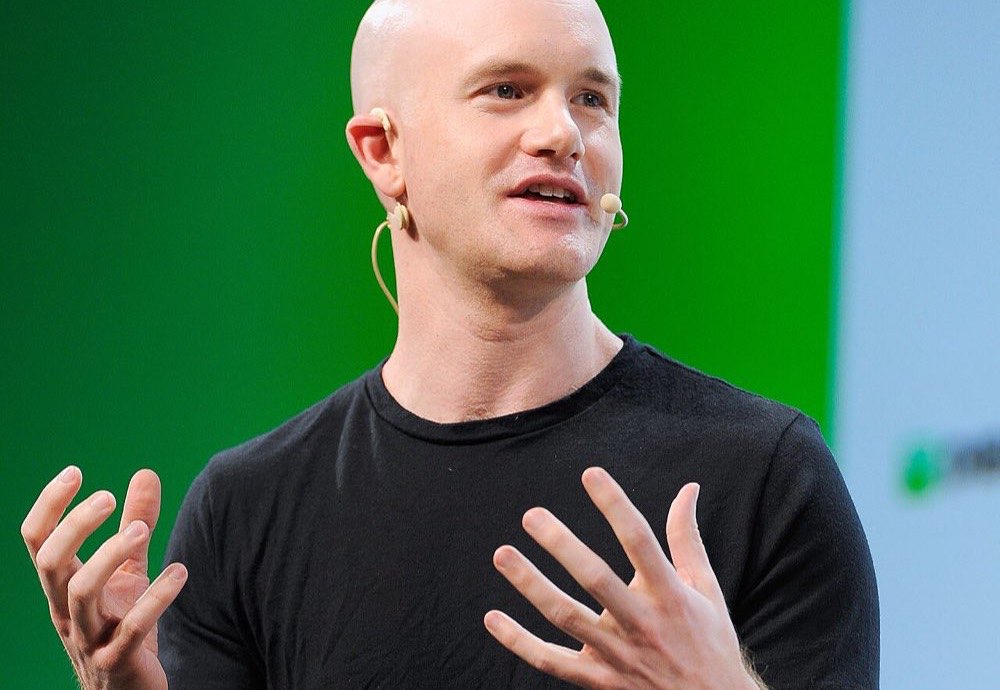
- Coinbase posted $6.3 billion in revenue and $2.6 billion in net income in 2024, making it the most profitable year in the company’s history.
- Brian Armstrong co-founded Coinbase in 2012 after reading the Bitcoin white paper while working as a software engineer at Airbnb.
- The company went public via direct listing on Nasdaq in April 2021, reaching an $86 billion valuation on day one.
- Coinbase spent $50 million fighting a SEC lawsuit — and won when the case was dismissed in February 2025.
$6.3 Billion in Revenue and a War Chest Built on Conviction
Coinbase is the largest publicly traded cryptocurrency exchange in the United States. In 2024, the company generated $6.3 billion in total revenue, with Q4 alone producing $2.2 billion — nearly double the prior quarter. Net income hit $1.3 billion in Q4, a 1,600% jump. The stock trades on Nasdaq under the ticker COIN, and the platform serves over 100 million verified users across more than 100 countries.
The man behind it is Brian Armstrong, a 43-year-old engineer turned CEO whose personal fortune has swung between $2 billion and $18 billion depending on the day’s Bitcoin price. His story is not one of overnight success. It is a decade-long bet on a technology most people dismissed as a scam — and a refusal to fold when the market, the regulators, and the headlines all said he should.
Born in Silicon Valley, Raised on Code
Armstrong was born on January 25, 1983, in San Jose, California. Both his parents were engineers. He grew up in the heart of Silicon Valley, surrounded by the culture of building things and shipping products. He attended Bellarmine College Preparatory, a competitive Catholic high school in San Jose.
He went on to Rice University in Houston, Texas, where he earned a dual bachelor’s degree in economics and computer science in 2005, followed by a master’s in computer science in 2006. While still at Rice, Armstrong co-founded UniversityTutor.com in 2003 — a marketplace connecting students with independent tutors. He ran it as CEO for nearly a decade.
The tutoring platform was modest, but it taught him something critical: how to build a two-sided marketplace from scratch. That skill would define his career.
From Airbnb’s Payment Systems to the Bitcoin White Paper
After Rice, Armstrong worked briefly at IBM and then as a consultant at Deloitte. Neither stuck. In 2011, he joined Airbnb as a software engineer, where he worked on fraud prevention and international payment systems.
Airbnb operated in 190 countries. Moving money across borders was slow, expensive, and riddled with friction. Armstrong spent his days watching money get lost in the plumbing of the global financial system. The experience radicalized him.
”I was at Airbnb trying to send payments to hosts in South America, and it was a nightmare. The existing financial system is broken for most of the world.” — Brian Armstrong
In 2010, he had read Satoshi Nakamoto’s Bitcoin white paper. By 2012, he was convinced that cryptocurrency could fix what he was seeing at Airbnb — not someday, but now. He quit his job and applied to Y Combinator. It was a bet on the same conviction that would later drive Patrick Collison to build Stripe — that internet-native financial infrastructure was inevitable.
2012: A $150,000 Check and a Co-Founder Found on Reddit
Y Combinator accepted Armstrong’s pitch and gave him $150,000. But he had no team. He posted on Hacker News looking for a co-founder. That post, now legendary in crypto circles, attracted dozens of responses — but no match.
He found Fred Ehrsam on a Bitcoin subreddit. Ehrsam was a former Goldman Sachs trader who understood both markets and technology. After more than fifty meetings with potential co-founders, Armstrong knew Ehrsam was the one. They launched Coinbase out of a two-bedroom apartment in San Francisco in October 2012, offering a simple product: buy and sell Bitcoin using a bank transfer.
”Nothing was working. I was struggling to find anybody who would join my team and work with me. But I kept going because I believed the technology was inevitable.” — Brian Armstrong
The early days were brutal. Crypto was niche, misunderstood, and associated with Silk Road. But Armstrong’s thesis was simple: make buying Bitcoin as easy as buying a book on Amazon. Remove the friction, and the users will come.
Surviving Four Crypto Winters and the SEC
They came — and then they left, and then they came back. Coinbase rode every Bitcoin cycle. The 2017 bull run pushed the platform to mainstream awareness. Then the crash. Then another boom in 2020-2021 fueled by pandemic-era stimulus and institutional adoption.
On April 14, 2021, Coinbase went public via direct listing on Nasdaq. Shares opened at $381, and the company’s fully diluted market cap touched $86 billion — making it the seventh-largest new U.S. listing of all time. Armstrong, holding a 14% stake, became a billionaire several times over.
Then came the crypto winter of 2022. Bitcoin dropped below $17,000. Coinbase cut 18% of its workforce — about 1,100 people — in June 2022, with Armstrong publicly admitting the company had “over-hired.” A second round of cuts followed in January 2023, bringing total layoffs to over 2,000.
In June 2023, the SEC sued Coinbase, alleging it operated as an unregistered securities exchange. Armstrong did not settle. He spent $50 million on legal defense and became one of the most vocal critics of the SEC’s approach to crypto regulation. In February 2025, the SEC agreed to dismiss the lawsuit entirely.
From Crypto Exchange to Financial Infrastructure
Armstrong’s ambition has grown beyond trading. Coinbase now offers staking, custody services for institutions, a layer-2 blockchain called Base, and a growing international business. The exchange remains the primary on-ramp for institutional crypto, even as rivals like Changpeng Zhao’s Binance dominate global volume. The company pushed aggressively into Europe during the 2022 downturn while competitors retreated.
The approval of spot Bitcoin ETFs in January 2024 was a turning point. Coinbase serves as the custodian for several major ETFs, including BlackRock’s iShares Bitcoin Trust. Revenue nearly doubled in Q1 2024 on the back of ETF-driven demand. The company’s full-year 2024 results — $6.3 billion in revenue and $2.6 billion in net income — were records.
Armstrong also led Stand With Crypto, an advocacy organization that mobilized over a million supporters during the 2024 U.S. election cycle, pushing for pro-crypto legislation.
The Mission That Hasn’t Changed
Armstrong’s net worth peaked near $18 billion in mid-2025 before dropping to around $7.4 billion by early 2026, tracking Coinbase’s stock decline of over 50% from its highs. The volatility is the point — his wealth is almost entirely in COIN equity, a deliberate choice.
”Crypto can unleash the next chapter of capitalism: the age of economic freedom. A global economy, powered by tech and people rather than governments, where anyone with an internet connection can participate.” — Brian Armstrong
Fourteen years after reading a white paper that most people ignored, Armstrong runs the company that made cryptocurrency accessible to 100 million people. The crypto exchange he built from a two-bedroom apartment now generates billions. Whether the market is up or down, the mission remains the same: an open financial system for the world.