
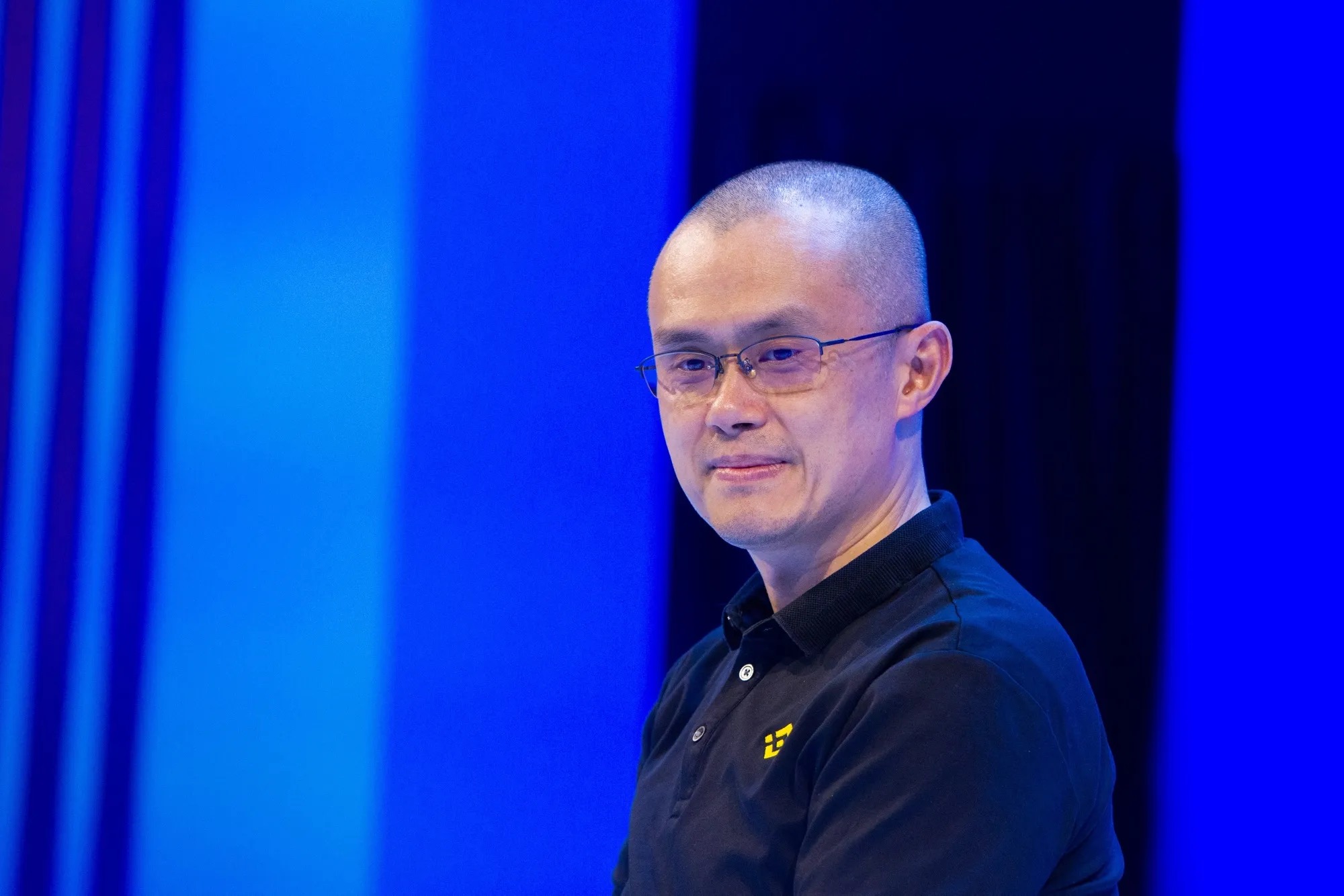
- Binance processes more crypto trading volume than any exchange on Earth, with 300 million registered accounts as of late 2025.
- Changpeng Zhao emigrated from China to Canada as a teenager, worked at McDonald’s, studied computer science at McGill, and built a $110 billion fortune.
- Zhao pleaded guilty to U.S. money laundering charges in November 2023, paid a $50 million fine, served four months in federal prison, and was pardoned by President Trump in October 2025.
- After stepping down as CEO, Zhao launched Giggle Academy, a free digital education platform, and was appointed crypto advisor to the president of Kyrgyzstan.
Binance is a machine that never sleeps. In any given second, billions of dollars in crypto trades flow through its matching engines. More than 300 million users across 180+ countries trust it with their money. The exchange controls roughly half of all global crypto spot trading volume — a dominance that Brian Armstrong’s Coinbase has never come close to matching.
The man who built it, Changpeng Zhao, known universally as CZ, is no longer its CEO. He resigned as part of a $4.3 billion settlement with the U.S. Department of Justice. He served time in a federal halfway house. And by early 2026, Forbes estimates his net worth at $110 billion — surpassing Bill Gates and making him the richest person in crypto history.
A Boy From Jiangsu Who Learned English Flipping Burgers
Zhao was born in 1977 in Lianyungang, a coastal city in China’s Jiangsu province. His parents were schoolteachers. His father, Zhao Shengkai, a university instructor, had been branded a “pro-bourgeois intellect” and exiled to rural China shortly after CZ’s birth — a stigma that shaped the family’s early years.
In late 1989, weeks after the Tiananmen Square crackdown, the family secured Canadian visas and emigrated to Vancouver. Zhao was 12. They arrived with almost nothing. To help pay the bills, the teenage CZ worked nights at McDonald’s, pumped gas on weekends, and took whatever odd job came his way.
”I flipped burgers at McDonald’s when we first got to Canada. I did overnight shifts at a gas station. Whatever it took.” — Changpeng Zhao
He enrolled at McGill University in Montreal, where he studied computer science. The degree would prove more useful than any job he’d held so far — but not immediately.
Tokyo, Bloomberg, and the Education That Code Couldn’t Teach
After McGill, Zhao landed an internship at the Tokyo Stock Exchange, developing software to match trade orders for a subcontractor. The job taught him the architecture of financial markets — how orders flow, how latency kills, how matching engines determine who wins.
He moved to New York and spent four years at Bloomberg Tradebook, building futures trading software. The Bloomberg years gave him two things: deep fluency in financial infrastructure and an understanding that Wall Street’s plumbing was decades behind what software could do. By the time he left, Zhao had the technical toolkit to build an exchange from scratch. He just needed the right asset class.
Shanghai, 2013: A Poker Game That Changed Everything
The pivot came in 2013. A friend invited Zhao to a poker game in Shanghai. At the table, someone mentioned Bitcoin. Zhao went home and read the Satoshi Nakamoto whitepaper that same night. Within weeks, he sold his apartment and put the money into Bitcoin at around $600 per coin.
In 2014, he joined OKCoin as CTO — one of China’s largest crypto exchanges at the time. The stint lasted less than a year. Zhao clashed with management and left. But the experience crystallized what he wanted: his own exchange, built his way.
Bijie Tech: 30 Exchanges in 12 Months, and Still Not Enough
In 2015, Zhao founded Bijie Tech in Shanghai, a company that built white-label exchange software for crypto platforms. Within 12 months, Bijie powered over 30 exchanges across Asia and generated $5.3 million in revenue. The business was profitable. It was also a stepping stone.
Zhao could see the entire crypto exchange landscape from the inside — every bottleneck, every design flaw, every missed opportunity. He wasn’t building someone else’s infrastructure anymore. He was studying the blueprint for his own.
July 2017: Binance Goes Live and Conquers the World in 180 Days
Zhao launched Binance in July 2017 with a $15 million ICO. Trading went live 11 days later. He staffed the company with senior engineers poached from Bijie Tech. The exchange listed tokens faster than competitors, charged lower fees, and offered a native token — Binance Coin (BNB) — that early buyers picked up for as little as $0.10.
”I never view anyone as competition. I have an abundance mentality — most things in this world are not limited resources.” — Changpeng Zhao
By April 2018, less than eight months after launch, Binance was the largest crypto exchange on the planet by trading volume. When China cracked down on crypto, Zhao moved operations to Japan, then Malta, then to no fixed headquarters at all. Binance became a company without a country — a feature, not a bug, in the eyes of its founder.
The $4.3 Billion Reckoning: Guilty Plea, Prison, and a Presidential Pardon
The reckoning came in November 2023. The U.S. Department of Justice charged Zhao with violating the Bank Secrecy Act — failing to implement anti-money-laundering controls while knowingly serving American users. Prosecutors alleged Binance had processed transactions linked to sanctioned entities, terrorist organizations, and ransomware operators.
Zhao pleaded guilty. He agreed to step down as CEO, pay a $50 million personal fine, and accept Binance’s $4.3 billion corporate settlement — the largest penalty in crypto history. Richard Teng, a former Singaporean regulator, took over as CEO. In April 2024, a federal judge in Seattle sentenced Zhao to four months in prison — far lighter than the three years prosecutors had requested. He was released in September 2024.
”The whole experience is just very limiting. Your freedom is taken away and you have nothing to do, so it gives you a lot of time to reflect.” — Changpeng Zhao
Then, on October 23, 2025, President Trump granted Zhao a full and unconditional pardon. The White House framed the original prosecution as part of “the Biden Administration’s war on cryptocurrency.” Critics, including Senator Elizabeth Warren, pointed to financial ties between Binance and Trump-linked crypto ventures.
$110 Billion and a New Chapter Beyond the Exchange
Today, Zhao holds no official title at Binance. He remains its largest shareholder. His net worth, fueled by his BNB holdings and Binance equity, has soared to an estimated $110 billion — placing him ahead of everyone on the 2026 Forbes Billionaires List except a handful of tech titans — a figure Zhao himself disputes, telling Forbes the number is “way too high.” It doesn’t matter. By any credible estimate, he is the wealthiest person to emerge from the crypto industry.
His focus has shifted. Zhao now spends at least half his time on Giggle Academy, a free digital education platform targeting underserved communities worldwide. In May 2025, Kyrgyzstan’s president appointed him as a national advisor on digital asset policy. He warns followers against blindly buying memecoins, advises patience over speculation, and seems genuinely uninterested in returning to the CEO seat.
The story of Changpeng Zhao is not a redemption arc. It’s a straight line — from a 12-year-old immigrant flipping burgers in Vancouver to the richest person in crypto, interrupted by a guilty plea and four months behind bars. The conviction cost him his title. The pardon erased his record. The fortune stayed.