
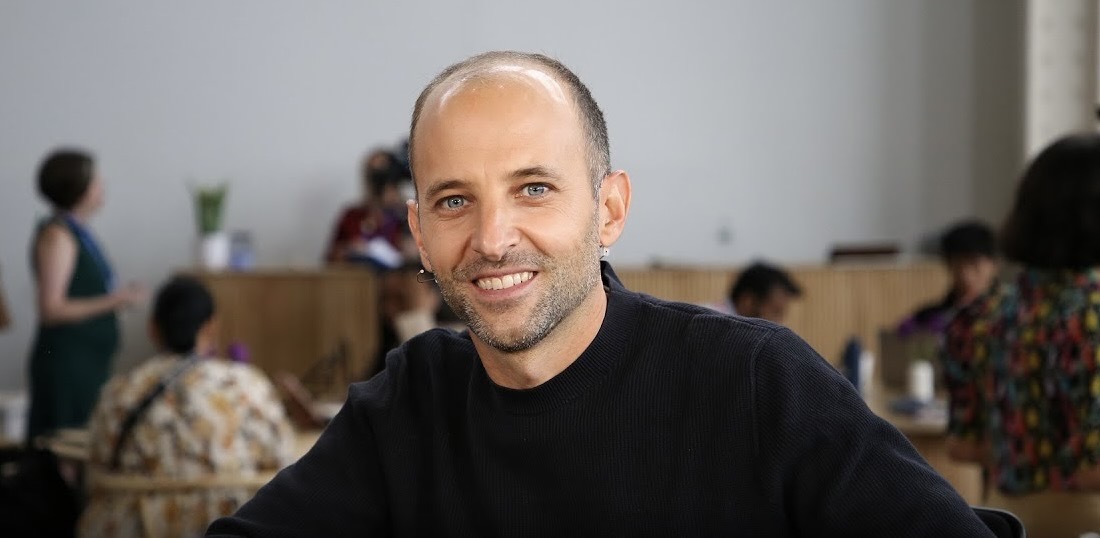
- monday.com surpassed $1 billion in annual recurring revenue in 2024, serving over 250,000 customers including Canva, McDonald’s, and Coca-Cola.
- Daniel Lereya joined the company in 2016 when it was still called Dapulse and had barely crossed $4 million in ARR.
- As CPTO, Lereya architected monday.com’s pivot from project management tool to multi-product Work Operating System — and is now leading its AI agent strategy.
- Before monday.com, he spent four years at IBM building enterprise storage systems and cut his teeth on cloud platforms at SAP.
A $1 Billion Work OS and the Man Behind Its Technical Backbone
monday.com is no longer a project management app. In 2026, it is a publicly traded platform doing $1.25 billion in annual revenue, growing 29% year over year, with a market cap north of $12 billion. Over 250,000 organizations — from three-person startups to Fortune 500 giants — run their operations on it. The product suite spans CRM, developer tools, service management, and a growing fleet of AI-powered agents — riding the same agentic web trend reshaping enterprise software.
The person who built most of that technical infrastructure, shipped the multi-product strategy, and now leads the company’s AI transformation is Daniel Lereya. He holds the title of Chief Product and Technology Officer — monday.com’s first — and has been with the company since before it had a name anyone recognized.
Tel Aviv, Computer Science, and a Detour Through Enterprise Giants
Lereya grew up in Israel and studied computer science and economics at Tel Aviv University, graduating around 2012. The dual degree wasn’t accidental. He wanted to understand both how software works and how businesses make decisions — a combination that would define his entire career.
His first real job was at SAP, where he spent nearly two years building cloud-based platforms for business web applications running on SAP’s HANA in-memory database. It was deep, unglamorous infrastructure work — the kind that teaches you how enterprise software actually behaves at scale.
”People adopt products, not technology, and that’s where monday.com comes in. By embedding intelligence into the products our customers already know, use, and love, AI will accelerate our mission to democratize the power of software.” — Daniel Lereya
From SAP, he moved to IBM’s XIV storage division, where he led a development team of five to ten engineers and built IBM-XIV’s new Storage Management Application from scratch. Four years of scrum mastering, system architecture, and shipping enterprise-grade products. Not the kind of resume that screams “future startup leader” — but exactly the kind of training that makes one.
November 2016: Joining a Company Nobody Had Heard Of
When Lereya joined Dapulse in November 2016, the company had just crossed $4 million in annual recurring revenue. It was a small team in Tel Aviv building a visual project management tool that competed against Asana, Trello, and a dozen others. The founders — Roy Mann, Eran Zinman, and Eran Kampf — had spun the idea out of Wix, where they’d built internal tools to manage their own scaling chaos.
Lereya came in to lead R&D. Within a year, the company hit $13 million in ARR — 300% year-over-year growth. By 2018, Dapulse had rebranded to monday.com and made a bet that would separate it from every competitor: it stopped calling itself a project management tool and started calling itself a Work OS.
That shift — from single product to platform — was Lereya’s domain. He expanded from running R&D to overseeing all of Product, becoming VP of R&D and Product by 2020.
The Wake-Up Call That Changed How 2,000 People Worked
Somewhere around 2022, Lereya and the leadership team had a realization that most companies avoid until it’s too late: they were being outpaced. Not in revenue — the numbers were strong. But in velocity. In the speed at which they shipped things that mattered.
The response was radical. Lereya restructured how the entire product and engineering organization operated. He introduced a philosophy he calls “impact over output” — stop measuring how many features you ship and start measuring whether those features solve real business problems. He pushed for radical transparency, opening up real-time business metrics to every employee. Not just executives. Not just managers. Everyone — including job candidates during interviews.
”AI is fundamentally changing the way people adopt, onboard, and enhance work solutions. We’re entering a new era where software doesn’t just manage the work, it actually does the work for you.” — Daniel Lereya
Then came the impossible goals. Lereya challenged his teams to build 25 new features in a single month. It sounded absurd. But the point was never the number — it was the mindset shift. Teams stopped optimizing for safety and started optimizing for speed. The culture that emerged from that experiment powered monday.com’s push past $1 billion in ARR.
From Work Management to Work Execution: The AI Bet
In July 2023, monday.com appointed Lereya as its first-ever Chief Product and Technology Officer — a signal that the company was consolidating product and engineering leadership under a single technical vision. That vision, it turned out, was AI.
Lereya’s AI strategy rests on three pillars: AI Blocks that embed intelligence directly into workflows, Product Power-ups that enhance existing tools, and a Digital Workforce — autonomous AI agents that execute tasks end-to-end. By early 2025, monday’s AI assistant had processed over 10 million actions. The company launched a no-code agent builder that lets any organization create AI specialists tailored to their operations.
The pitch is straightforward: monday.com helped companies manage work. Now it wants to do the work for them.
The Quiet Architect of a Very Loud Company
monday.com’s September 2025 product expansion rolled out AI-powered agents, an overhauled CRM suite, and enterprise-grade capabilities — all under Lereya’s technical leadership. The company now serves customers like Canva, McDonald’s, and Coca-Cola. It went public on Nasdaq in June 2021 under the ticker MNDY, and has grown revenue from $161 million in 2020 to $1.25 billion in 2025.
”AI can actually accelerate our vision. It’s not just about putting new tech in place, it’s about giving more power to people who aren’t necessarily tech people, so they can get more business value with less friction.” — Daniel Lereya
Lereya doesn’t have the public profile of a typical tech CEO. He doesn’t post manifestos or dominate conference keynotes. What he does is build — systems, teams, cultures that ship. He took an engineering organization at a $4 million ARR startup and turned it into the engine behind a $12 billion public company. And now he’s betting that AI agents will make monday.com as essential to how companies execute work as email once was to how they communicated.
The SaaS world is full of people who talk about AI transformation — as the debate over whether SaaS is dead intensifies. Lereya is one of the few who has the infrastructure, the team, and the track record to actually deliver it.