
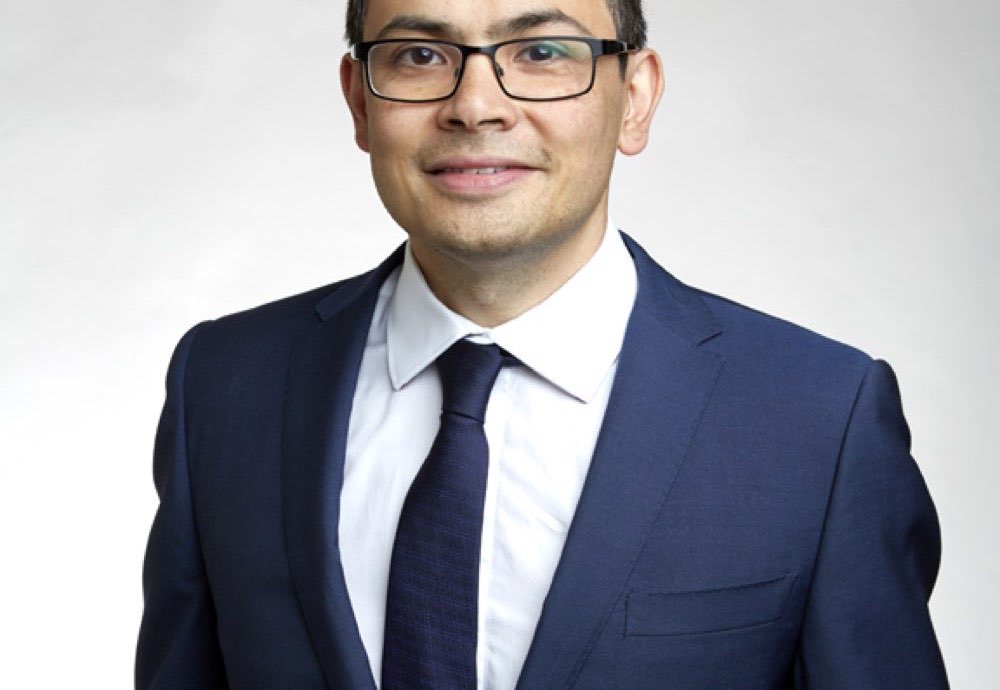
- Google DeepMind powers Gemini, used by over 650 million monthly users, and its AlphaFold model has been accessed by more than 2 million researchers in 190 countries.
- Demis Hassabis won the 2024 Nobel Prize in Chemistry for AlphaFold2, which predicted the 3D structure of virtually all 200 million known proteins.
- Hassabis co-designed the hit video game Theme Park at age 17, which sold over 15 million copies before he even started university.
- He also founded Isomorphic Labs, valued at $2.5 billion, to use AI to redesign drug discovery from the ground up.
Google DeepMind is the most consequential AI lab on the planet. Its models power Google Search, Gemini reaches 650 million monthly users, and its scientific breakthroughs — from protein folding to materials discovery — have reshaped entire fields of research. Over 2 million scientists in 190 countries have used AlphaFold to accelerate their work.
At the center of all of it stands Demis Hassabis, a 49-year-old Londoner who became a chess master at 13, shipped a bestselling video game at 17, earned a PhD in neuroscience, and won the Nobel Prize in Chemistry before turning 50. His career reads less like a tech founder’s resume and more like a novel where the protagonist keeps choosing the hardest possible path.
A Chess Master at 13, a Programmer Before That
Hassabis was born in North London in 1976 to a Greek-Cypriot father and a Chinese-Singaporean mother. He learned to play chess at four. By 13, he had reached master standard with an Elo rating of 2,300 and was captaining England’s junior chess teams.
But the real obsession came a year earlier. In 1984, he used his chess winnings to buy a ZX Spectrum 48K — his first computer. He taught himself to code from books and built an AI program on a Commodore Amiga that could play the board game Reversi. He was eight years old.
”I grew up playing chess and programming computers. I was always fascinated by this question: can you build something that thinks?” — Demis Hassabis
He attended Queen Elizabeth’s School in Barnet, a grammar school in North London, and was already fielding interest from the games industry before he could legally drive.
17 Years Old, One Game, 15 Million Copies Sold
Cambridge told him to take a gap year — he was too young. So Hassabis entered a competition run by Amiga Power magazine to win a job at Bullfrog Productions, the studio behind Populous and Syndicate. He won.
At 17, he became co-designer and lead programmer on Theme Park alongside Peter Molyneux. The simulation game sold over 15 million copies, won the Golden Joystick Award, and became a genre-defining title. The earnings paid his way through university.
Hassabis went on to study computer science at Queens’ College, Cambridge, graduating with a double first. He represented Cambridge in three varsity chess matches against Oxford. After graduation, he returned to games, founding his own studio, Elixir Studios, and later earned a PhD in cognitive neuroscience at University College London, publishing influential papers on imagination and memory in the hippocampus.
The Neuroscience Detour That Changed Everything
Most AI founders come from computer science or engineering. Hassabis took a different route. His PhD at UCL focused on how the human brain constructs imagined scenarios — work that landed in journals like Science and Nature.
The research convinced him of something that would shape the next two decades of his career: the path to artificial general intelligence ran through neuroscience. Understanding how the brain solves problems would reveal how to build machines that could do the same.
”Step one, solve intelligence. Step two, use it to solve everything else.” — Demis Hassabis
That two-line mission statement became the founding philosophy of DeepMind.
London, 2010: DeepMind Is Born
In 2010, Hassabis co-founded DeepMind in London with Shane Legg and Mustafa Suleyman. The goal was audacious and unfashionable: build artificial general intelligence. Not a chatbot. Not an ad-targeting algorithm. Intelligence itself.
Early investors included Elon Musk and Peter Thiel. In January 2014, Google acquired DeepMind for more than $500 million — outbidding Facebook — making it the largest European tech acquisition at the time. Hassabis insisted on staying in London and maintaining research independence.
The first global demonstration of what DeepMind could do came in March 2016, when AlphaGo defeated Go world champion Lee Sedol 4-1 in Seoul. Over 200 million people watched. Experts had predicted the feat was a decade away. Hassabis delivered it overnight.
AlphaFold Cracks a 50-Year-Old Problem, Then a Nobel Prize
But AlphaGo was a demonstration. AlphaFold was a revolution. In 2020, Hassabis and researcher John Jumper unveiled AlphaFold2, an AI model that could predict the 3D structure of proteins from their amino acid sequences — a problem that had stumped biologists for half a century.
The model predicted the structure of virtually all 200 million known proteins, each in minutes rather than the months or years traditional methods required. More than 2 million researchers across 190 countries have since used AlphaFold to accelerate work on everything from antibiotic resistance to enzyme design.
In October 2024, the Nobel Committee awarded Hassabis and Jumper the Nobel Prize in Chemistry, alongside David Baker for computational protein design. It was the first Nobel ever awarded for AI-driven scientific discovery.
“It’s unbelievably special,” Hassabis said in Stockholm. “It hasn’t really sunk in. But it’s an incredible honour. It’s the big one, really.”
What Comes After a Nobel Prize
Most people would coast. Hassabis added a second full-time job. He now serves as CEO of both Google DeepMind — where he talks to Sundar Pichai daily — and Isomorphic Labs, the Alphabet-backed drug discovery company he founded in 2021. Isomorphic raised $600 million from Thrive Capital in 2025 and is valued at $2.5 billion, with partnerships with Novartis and Eli Lilly.
According to Fortune, Hassabis starts his second workday at 10 p.m. and hits his peak at 1 a.m. He told Axios he believes there is a 50% chance of achieving AGI by 2030. In December 2025, DeepMind signed a deal with the UK government to build its first fully automated scientific laboratory in 2026.
The chess prodigy from North London is now running the most ambitious AI research operation in history, building toward a future where machines don’t just predict proteins — they design new drugs, discover new materials, and run experiments autonomously. And he still thinks the hardest problems are the ones worth solving.