
- Avalanche runs over 80 live Layer-1 chains, processes transactions in under one second, and holds $743 million in tokenized real-world assets across its ecosystem.
- Emin Gün Sirer created Karma in 2003, a proof-of-work digital currency that predated Bitcoin by six years, while teaching at Cornell University.
- Ava Labs raised $350 million at a $5.25 billion valuation in 2022, then secured another $250 million token sale led by Galaxy Digital in late 2024.
- Avalanche9000, the network’s largest upgrade, went live in December 2024, slashing deployment costs by 99.9% and enabling hundreds of institutional chains.
80 Layer-1 Chains and the Institutions That Trust Them
Avalanche is no longer a whitepaper promise. The network supports over 80 live Layer-1 chains, with more than 100 additional chains in testnet. BlackRock expanded its $500 million BUIDL tokenized money market fund onto the platform — the same fund that Hayden Adams connected to Uniswap via Securitize. Franklin Templeton brought its FOBXX fund. KKR tokenized part of its healthcare growth fund through Securitize on Avalanche. Wyoming launched the first state-issued stablecoin in the United States — fully backed by U.S. Treasuries — on the network.
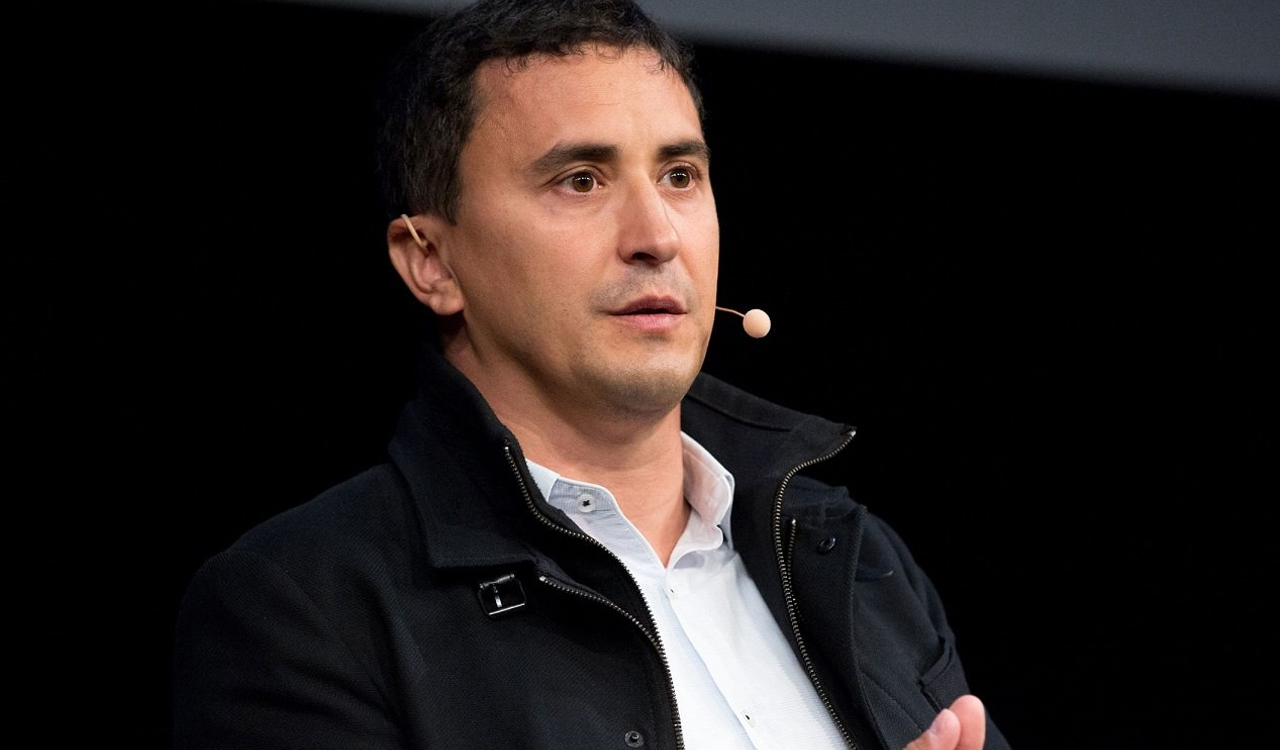
Behind all of it is Emin Gün Sirer, a Turkish-American computer scientist who spent two decades in academia before deciding that the best way to fix blockchain was to build one from scratch. His path from a Cornell lecture hall to a $5.25 billion company started not in 2018 when he co-founded Ava Labs, but in 2003, when he invented a digital currency that almost nobody noticed.
A Kid From Istanbul Who Arrived at Princeton With a Plan
Sirer grew up in Istanbul and attended Robert College, one of Turkey’s most competitive high schools. He left for the United States to study computer science at Princeton, where he earned his BSE. Graduate school took him to the University of Washington, where he completed his Ph.D. in Computer Science and Engineering in 2002 under Brian Bershad.
He joined Cornell University immediately after, diving into research on peer-to-peer systems, operating systems, and computer networking. Cornell gave him the lab. It also gave him the freedom to chase ideas that the rest of the industry was not ready for.
2003: A Digital Currency Six Years Before Satoshi
In 2003, Sirer and two students — Vivek Vishnumurthy and Sangeeth Chandrakumar — built Karma, a peer-to-peer digital currency that used proof of work to mint coins. The system had a distributed mint, peer-to-peer transactions, and solved the free-rider problem in file-sharing networks. It was, by any technical definition, a cryptocurrency — six years before Satoshi Nakamoto published the Bitcoin whitepaper.
Karma did not take off. The timing was catastrophic. In the post-9/11 climate, colleagues warned Sirer that funding for anything resembling digital currency was dead on arrival due to terrorist financing concerns. He shelved the project and moved on.
”There was so much concern about terrorist financing after 9/11 that my colleagues told me I would never get funding for this kind of work. So I stopped working on Karma and moved on to new areas of study.” — Emin Gün Sirer
The Selfish Mining Paper That Shook Bitcoin
Sirer did not stop thinking about digital currencies. He watched Bitcoin emerge and quickly saw what others celebrated as elegance, he identified as vulnerability. In 2013, he and researcher Ittay Eyal published “Majority is not Enough,” a paper that demonstrated Bitcoin’s mining protocol was exploitable by a coalition controlling just 33% of hash power — far below the 50% threshold Satoshi’s original analysis assumed.
The paper, known as the selfish mining attack, sent shockwaves through the crypto community. CNN covered it. Princeton researchers debated it. Bitcoin maximalists attacked Sirer personally. The research landed in the proceedings of Financial Cryptography in 2014 and remains one of the most cited papers in blockchain security.
”The big breakthrough behind Avalanche is a consensus protocol where a group of entities can make a decision even with bad participants, without having to talk to every other member. That means we can make decisions under a second.” — Emin Gün Sirer
Sirer was not content to just criticize. He co-founded the Initiative for Cryptocurrencies and Contracts (IC3) at Cornell, assembling researchers to work on what blockchain should become, not just what it was.
Team Rocket, Three Co-Founders, and a $42 Million Launch
In May 2018, a pseudonymous group called Team Rocket published a paper on IPFS titled “Snowflake to Avalanche: A Novel Metastable Consensus Protocol Family for Cryptocurrencies.” The protocol described a radically different approach to consensus — one that scaled to thousands of nodes without sacrificing speed or decentralization. Sirer’s fingerprints were all over it. The protocol offered an alternative to the approach taken by chains like Anatoly Yakovenko’s Solana.
Later that year, Sirer co-founded Ava Labs with two of his Cornell PhD students, Kevin Sekniqi and Maofan “Ted” Yin. The company was incorporated in 2019 with a single mission: build the blockchain that institutions would actually use.
In September 2020, Avalanche launched its mainnet. The same month, the AVAX token sale raised $42 million in under five hours — a signal that the market was ready for a Layer-1 that promised sub-second finality and customizable subnets. By 2022, Ava Labs had raised $350 million at a $5.25 billion valuation, with investors including Andreessen Horowitz, Polychain Capital, and Three Arrows Capital.
Avalanche9000 and the Race for Institutional Chains
The Avalanche9000 upgrade, which went live on December 16, 2024, was the network’s most ambitious technical overhaul. It reduced the cost of deploying a custom Layer-1 chain by 99.9% and lowered base fees on the C-chain from 25 nAVAX to 1 nAVAX. The Avalanche Foundation raised $250 million ahead of the launch in a token sale led by Galaxy Digital, Dragonfly, and ParaFi Capital.
The upgrade unleashed a wave of institutional experimentation. Financial firms including T. Rowe Price, WisdomTree, Wellington Management, and Cumberland joined the Spruce testnet to explore on-chain trade execution and settlement. RWA asset value on Avalanche quadrupled quarter-over-quarter, reaching $743 million and placing the network among the top five chains by tokenized asset value.
The Professor Who Decided to Build
Sirer’s trajectory in 2025 and 2026 has been one of expansion. Nearly 200 institutional and enterprise chains are expected to operate on Avalanche by 2027, spanning finance, digital identity, artificial intelligence, and government services. He stepped away from Cornell — after more than 20 years — to run Ava Labs full-time, trading the security of tenure for the volatility of crypto.
”The blockchain industry has matured beyond its experimental roots. Avalanche’s biggest advantage is combining speed, scalability, and security without compromise.” — Emin Gün Sirer
He is not the loudest voice in crypto. He does not post memes or pick public fights. He publishes papers, ships upgrades, and signs enterprise deals. The professor who built a currency before Bitcoin and exposed its flaws now runs the blockchain that BlackRock, KKR, and an entire U.S. state trust with real money.