
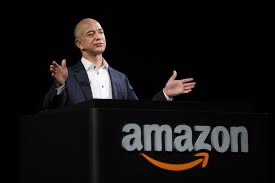
- Project Prometheus launched in November 2025 with $6.2 billion in funding and Jeff Bezos as co-CEO — his first C-suite role since stepping down from Amazon in 2021.
- Jeff Bezos is now raising $100 billion to acquire and transform legacy manufacturing companies using Prometheus’s AI models.
- Bezos Expeditions has backed a portfolio of AI leaders including Anthropic, Perplexity AI, and Figure AI.
- Prometheus acquired agentic AI startup General Agents in November 2025 and has hired over 120 researchers from Meta, OpenAI, and DeepMind.
Project Prometheus is building AI for the physical economy. The startup, co-founded and co-led by Jeff Bezos alongside Vik Bajaj, has already secured $6.2 billion in funding, acquired an agentic computing company, recruited over 120 researchers from the world’s top AI labs, and is now seeking $100 billion to buy and overhaul legacy manufacturers across aerospace, defense, and chipmaking.
The man behind it is the same person who turned a garage bookstore into the most valuable company on Earth. But this time, Bezos isn’t selling products. He’s rewiring how the physical world gets built.
$6.2 Billion, 120 Researchers, and a Mission to Remake Industry
Project Prometheus emerged from stealth in November 2025 as one of the most well-financed startups in history. Bezos serves as co-CEO alongside Vik Bajaj, a physicist and chemist who previously co-founded Alphabet’s health sciences arm Verily and worked with Sergey Brin at Google X on projects that became Waymo and Wing.
The company’s core technology centers on digital twins — AI systems that simulate how physical systems behave under different conditions, from material stress to factory layouts. The goal is not to compete with OpenAI or Anthropic on chatbots and language models. It is to make factories, supply chains, and engineering processes dramatically faster and cheaper.
Within weeks of its founding, Prometheus had already hired researchers from Meta, OpenAI, and Google DeepMind. The talent war in AI has a new front — and Bezos is winning it with checkbooks and ambition.
A Garage in Bellevue and the Birth of a $2 Trillion Company
Bezos grew up in Houston and Miami, raised in part by his stepfather Miguel Bezos, a Cuban immigrant who came to the United States alone at age 16. His maternal grandfather, Lawrence Preston Gise, ran a regional office of the U.S. Atomic Energy Commission and owned a ranch in Cotulla, Texas, where young Jeff spent summers fixing windmills and branding cattle.
He graduated summa cum laude from Princeton in 1986 with degrees in computer science and electrical engineering. By 30, he was a senior vice president at D.E. Shaw, one of Wall Street’s most secretive hedge funds. The job paid well. The internet paid better.
1994: Leaving Wall Street to Sell Books Online
In the summer of 1994, Bezos drove cross-country from New York to Seattle, writing the Amazon business plan in the passenger seat while his wife MacKenzie drove. He incorporated the company in his garage in Bellevue, Washington. The first product: books.
”I knew that if I failed I wouldn’t regret that, but I knew the one thing I might regret is not trying.” — Jeff Bezos
Amazon went public in 1997 at $18 a share. It nearly died during the dot-com crash. By 2005, it had launched Prime. By 2015, AWS was generating more operating profit than the entire retail business. By 2020, Amazon employed over 1.3 million people and had a market capitalization north of $1.5 trillion.
Stepping Down, Not Stepping Away
Bezos transitioned from CEO to executive chairman of Amazon in July 2021, handing the reins to Andy Jassy. For a while, the world assumed he was retiring into a life of yachts, space tourism, and philanthropy. Blue Origin launched him to the edge of space. He bought the Washington Post. He committed $10 billion to the Bezos Earth Fund for climate change.
But behind the scenes, something else was happening. Through Bezos Expeditions, his personal investment arm, he was quietly assembling a multibillion-dollar AI portfolio. Anthropic — the maker of Claude — received one of its earliest major external checks from Bezos. He backed Perplexity AI, the search engine now valued at $20 billion. He invested in Figure AI, the humanoid robotics startup. At the DealBook Summit in December 2024, Bezos said he was dedicating 95% of his time to AI.
”I don’t see how anybody can be discouraged who is alive. We are living in the most exciting time.” — Jeff Bezos, Italian Tech Week 2025
A Dinner at Saison and the General Agents Acquisition
The acquisition that signaled Prometheus’s ambitions came from an unexpected place: a two-Michelin-star restaurant in San Francisco. In early June 2025, Vik Bajaj hosted an off-the-record AI dinner at Saison. Among the guests was Sherjil Ozair, founder of General Agents and a former researcher at DeepMind and Tesla.
General Agents had built Ace — a real-time AI agent capable of taking over any computer and executing tasks autonomously. Corporate filings obtained by Wired showed that Bajaj formed an acquisition entity the morning after the dinner. Four days later, General Agents merged with Prometheus. The terms were never disclosed.
The move revealed Prometheus’s playbook: build the AI models for the physical world, then acquire the agentic systems that can act on them. Software that doesn’t just predict — software that does.
$100 Billion to Buy and Rebuild the Physical Economy
In March 2026, the Wall Street Journal reported that Bezos is seeking $100 billion for a manufacturing fund — the largest AI-focused acquisition vehicle ever assembled. The plan: buy legacy companies in aerospace, chipmaking, defense, and automotive, then transform their operations using Prometheus’s AI models.
Bezos has traveled to Singapore and the Middle East to raise capital from sovereign wealth funds. The pitch is straightforward — the world’s major manufacturing industries are ripe for automation, and the company that builds the AI layer for physical production will own the next industrial revolution.
”It is going to make their quality go up, and their productivity go up.” — Jeff Bezos on AI in manufacturing
Prometheus now employs over 120 people and has been valued as a unicorn since its first month of existence, according to Crunchbase. The $100 billion fund, if raised, would make Bezos not just an investor in AI but the single largest deployer of artificial intelligence in the physical economy.
The Builder Who Refused to Stop Building
Most billionaires who step down from the companies they built spend their remaining decades on boards, foundations, and keynote speeches. Bezos went back to the C-suite. At 62, he is co-running a startup with a physicist, acquiring AI companies over dinner, and flying to the Gulf to raise nine-figure checks.
The throughline from Amazon to Prometheus is not ambition — everyone at that level has ambition. It is the specific conviction that technology’s greatest impact is not in the digital world but in the physical one. Books, packages, rockets, factories. Bezos has always built things that move through space. Now he is building the intelligence that will move them faster.