
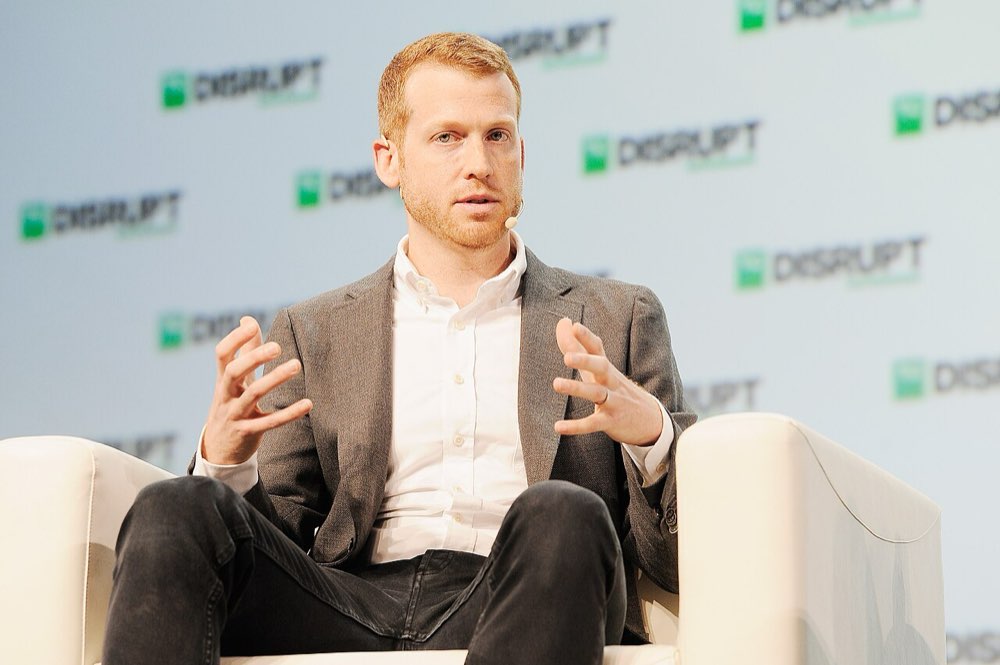
- The Bot Company is valued at $4 billion after raising over $550 million in under two years — building non-humanoid robots designed to do household chores.
- Kyle Vogt co-founded Twitch (acquired by Amazon for $970 million), Socialcam (acquired by Autodesk for $60 million), and Cruise Automation (acquired by GM for over $1 billion).
- Vogt resigned as Cruise CEO in November 2023 after California suspended the company’s autonomous driving permit following a pedestrian safety incident.
- The Bot Company was founded in 2024 with former Tesla AI leader Paril Jain and ex-Cruise engineer Luke Holoubek to build affordable home robots powered by large language models.
The Bot Company doesn’t have a product on the market yet. No demo videos. No polished launch event. And investors have already poured over $550 million into it at a $4 billion valuation. The reason is simple: Kyle Vogt has done this before — three times — and every company he built either changed an industry or sold for nine figures.
Vogt is one of the very few entrepreneurs alive who has co-founded three separate billion-dollar companies. Now 39, he is betting that AI-powered home robots will become as common as smartphones — and that the humanoid form factor everyone else is chasing is the wrong approach entirely.
BattleBots at 14, Self-Driving Cars by 18
Vogt grew up in Kansas City, Kansas, attending public schools in the Olathe and Shawnee Mission districts. He wasn’t the kid who dreamed about startups. He was the kid who built combat robots in his garage and competed on two seasons of BattleBots during high school.
By 14, he had built a self-driving Power Wheels car that navigated using computer vision — years before most engineers had heard the term. The obsession with autonomous machines started early, and it never stopped.
In 2004, Vogt enrolled at MIT to study computer science and electrical engineering. That same year, he joined a team competing in the DARPA Grand Challenge, the Pentagon-backed race that would become the birthplace of the modern autonomous vehicle industry. He helped retrofit a Ford F-150 with drive-by-wire capability and sensor arrays. He also interned at iRobot, makers of the Roomba — a detail that looks almost prophetic now.
Dropping Out of MIT for a Livestreaming Experiment
In his junior year, Vogt left MIT to join a ragtag group building Justin.tv — a website where co-founder Justin Kan would livestream his entire life, 24 hours a day. It sounded absurd. Vogt didn’t care. He designed the camera hardware and solved the streaming infrastructure challenges that made the concept technically viable.
Justin.tv evolved. In June 2011, the team spun out two companies: Socialcam, a mobile video app later acquired by Autodesk for $60 million in 2012, and Twitch, a gaming livestreaming platform. Twitch exploded. Amazon acquired it in 2014 for $970 million. Vogt was a co-founder of both.
”List something online, someone buys it — that moment kind of stuck with me.” That wasn’t Vogt’s story. His version was: build a machine, watch it move on its own, and feel the pull of a problem worth a lifetime.
Building Cruise From a San Francisco Garage
Most people would have coasted after Twitch. Vogt went back to the thing that had obsessed him since he was 14: self-driving cars. In October 2013, he founded Cruise Automation in San Francisco with the goal of retrofitting existing cars with autonomous driving technology.
The early days were scrappy. A small team, a handful of modified Audi sedans, and the conviction that full autonomy was closer than the industry believed. General Motors noticed. In March 2016, GM acquired Cruise for over $1 billion — one of the largest acquisitions in the history of autonomous vehicles at that point.
Vogt stayed on as CEO, scaling Cruise from a startup to a fleet of hundreds of driverless vehicles operating on public roads in San Francisco, Phoenix, and Austin. At its peak, Cruise had raised over $10 billion in total funding and employed thousands of engineers.
October 2023: The Incident That Changed Everything
On October 2, 2023, a pedestrian in San Francisco was hit by a human-driven car and thrown into the path of a Cruise robotaxi. The driverless vehicle struck her, trapped her underneath, and dragged her 20 feet. The California DMV suspended Cruise’s autonomous driving permit. Federal regulators opened investigations. The national conversation around robotaxi safety turned hostile overnight.
”So many things compete for our time — commutes, longer working hours, and the complexities of modern life. Our team has spent years building robots that give people some of that time back, and we’re taking that a step further with this company.”
On November 19, 2023, Vogt resigned as CEO. He had spent a decade building Cruise into one of the most advanced autonomous vehicle programs in the world. He left with his reputation battered but his conviction about robotics intact.
The Bot Company: $150 Million Before a Single Product
Five months later, in May 2024, Vogt was back. He launched The Bot Company alongside Paril Jain, who had led Tesla’s AI team, and Luke Holoubek, a former Cruise software engineer. The pitch: affordable home robots that handle household chores — not humanoid androids, but purpose-built machines with arms, grippers, and LLM-powered brains.
The company raised $150 million in seed funding at a $550 million valuation before showing anything publicly. Investors included Spark Capital, former GitHub CEO Nat Friedman, Pioneer founder Daniel Gross, and Stripe co-founders Patrick and John Collison. In March 2025, a $150 million Series B led by Greenoaks doubled the valuation to $2 billion.
”Today, 2025, I think it would be a leap of faith for any company to sell a humanoid robot and imply that it can do all of these things, because we’re still many years out from that.”
Vogt’s thesis is contrarian in a market obsessed with humanoid form factors from Tesla, Brett Adcock’s Figure AI, and others. The Bot Company is building a mobile platform — something closer to a low coffee table on wheels with an articulated arm — that uses cameras, LiDAR, and large language models to navigate homes and manipulate objects autonomously.
From $550 Million to $4 Billion in 18 Months
By October 2025, Bloomberg reported that The Bot Company was raising $250 million at a $4 billion valuation, led by Eclipse. Total funding crossed $550 million. No product on the market. No public demo. Just the track record of a founder who has built and exited three companies for a combined $2 billion — and the bet that home robotics is the next trillion-dollar category.
The company predicts that robots will become as ubiquitous as smartphones within a decade. Vogt has told investors he believes the next $100 billion company will have fewer than 100 employees — and that The Bot Company could be it. Whether the robot in your kitchen arrives in 2027 or 2030, Kyle Vogt is building like the answer is tomorrow.