
- Alchemy powers the infrastructure behind OpenSea, Uniswap, Aave, and Robinhood Crypto, processing billions of blockchain requests for over 100,000 developers worldwide.
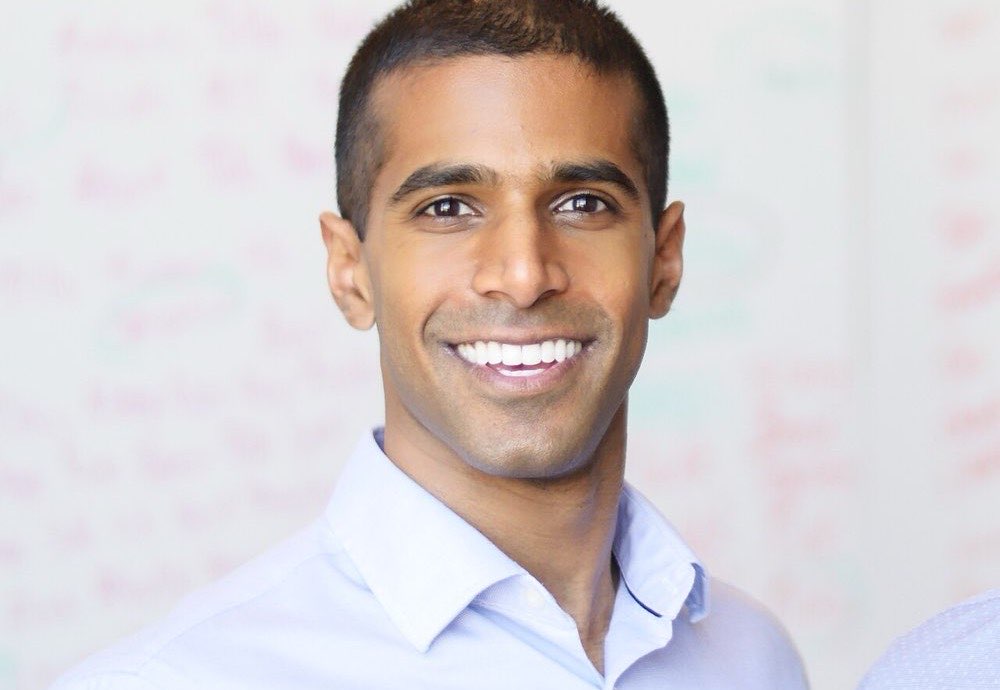
- Nikil Viswanathan studied computer science at Stanford, built the number one social app in the United States, and co-founded Alchemy in 2017 with Joe Lau.
- The company reached a $10.2 billion valuation in February 2022, just 16 months after its public launch — faster than any enterprise software company in history.
- Alchemy has raised $564 million from Andreessen Horowitz, Lightspeed, and Silver Lake, and now employs 368 people building the rails for autonomous AI payments on blockchain.
The AWS of Web3, Built by Two Stanford Friends
Alchemy is the infrastructure layer that most of crypto runs on and never sees. In 2026, the San Francisco-based platform processes trillions of blockchain API requests annually, serving as the connective tissue between decentralized applications and the chains they operate on. OpenSea, Uniswap, Aave, 0x, Robinhood Crypto — the biggest names in Web3 depend on Alchemy the way early internet companies depended on AWS.
The company has 368 employees, $564 million in total funding, and a $10.2 billion valuation. Its latest product, Cortex, is an intelligent blockchain engine trained on seven years of request data from the top crypto applications in the world. The man who built it grew up in California, studied at Stanford, and spent his twenties chasing a deceptively simple idea: make it easy for developers to build things.
A Stanford CS Student Who Couldn’t Stop Shipping
Nikil Viswanathan earned both a bachelor’s and a master’s degree in computer science from Stanford, where he focused on artificial intelligence and machine learning. Between classes, he interned at Google, Microsoft, and Facebook — three of the most competitive product management pipelines in tech. He checked every box. The traditional path was clear: join a FAANG company, climb the ladder, retire comfortably.
Viswanathan had no interest in the ladder. At Stanford, he spent more time building side projects than polishing his resume. He and his classmate Joe Lau shared an obsession with creating products people actually used — not products that looked good in a pitch deck. The two became inseparable, and their working relationship would outlast every trend Silicon Valley threw at them.
”We just love building products together. That’s all we’ve ever done.” — Nikil Viswanathan
A Friday Afternoon App That Hit Number One on the App Store
In early 2016, Viswanathan and Lau built Down to Lunch — a social app stripped down to a single button. Tap it, and your friends know you’re free to hang out. They coded the first version on a Friday afternoon in San Francisco’s SoMa neighborhood. Within weeks, it was the number one social app in the United States, outranking Facebook and Instagram on the App Store charts.
Then things went sideways. A fake App Store review accused the app of being linked to human trafficking. The claim was fabricated — Apple flagged and removed it — but copycat reviews and paid Twitter accounts spread the lie faster than Viswanathan and Lau could respond. Snopes debunked it. The damage was already done. Downloads cratered. Forbes had named Viswanathan to its 30 Under 30 list that same year, but the experience left a mark deeper than any accolade.
The Frustration That Led to Alchemy
Viswanathan and Lau moved on from Down to Lunch in early 2017. They started exploring blockchain — not as investors or speculators, but as developers trying to build on it. What they found was a mess. The developer tools were broken. The APIs were unreliable. Building a blockchain application in 2017 felt like building a web application in 1995, except the infrastructure was worse.
”We realized that blockchain was where the internet was in its earliest days — and the thing holding it back wasn’t the technology itself, it was the developer experience.” — Nikil Viswanathan
In August 2017, they founded Alchemy. The thesis was straightforward: if you want a million developers building on blockchain, you need to give them tools that actually work. Viswanathan and Lau became the plumbers of Web3 — not glamorous, but essential.
From a Demo in a Park to a $10 Billion Decacorn
Alchemy operated in stealth for nearly three years. Viswanathan and Lau demoed their product to early customers in parks and coffee shops, signing blockchain companies one by one. They didn’t raise a massive seed round or chase hype cycles. They built infrastructure, shipped features, and let the product speak.
The public launch came in late 2020. By October 2021, Andreessen Horowitz led a $250 million Series C at a $3.5 billion valuation. Four months later, Lightspeed Venture Partners and Silver Lake invested another $200 million, pushing the valuation to $10.2 billion. The jump from public launch to decacorn status took 16 months — faster than Stripe, faster than Snowflake, faster than any enterprise software company on record.
Cortex, AI Agents, and the Next Phase of Blockchain Infrastructure
By 2025, Alchemy had evolved well beyond its original API business. The company acquired DexterLab in May 2025 and launched Cortex, an intelligent blockchain engine trained on trillions of historical requests. The pitch is no longer just reliable infrastructure — it is infrastructure that thinks.
Viswanathan has been vocal about the convergence of AI and crypto. In a CNBC interview, he discussed stablecoins, the Genius Act, and the idea that blockchain is the natural transaction layer for autonomous AI agents — the same thesis driving the agentic web movement. Alchemy now enables AI agents to pay, trade, and deploy smart contracts in a single prompt — no human in the loop.
”Crypto is fundamentally the rails that AI is going to run on. It was made for AI even more than for humans.” — Nikil Viswanathan
Building for the Next Trillion Requests
Viswanathan compares blockchain in 2026 to physics in Newton’s era — foundational laws discovered, but the vast majority of applications still unimagined. Alchemy processes requests for over 100,000 developers building on dozens of chains. Alchemy’s infrastructure underpins protocols like Aave and supports everything from NFT marketplaces to decentralized finance protocols to institutional crypto products at companies like Robinhood and Adobe.
The company that started with two Stanford friends building apps on a Friday afternoon now sits beneath most of the blockchain economy. Viswanathan is 33, running a 368-person company valued at over $10 billion, and betting that the next decade of the internet will be built on infrastructure his team wrote. Given the track record, it is a bet worth taking seriously.