
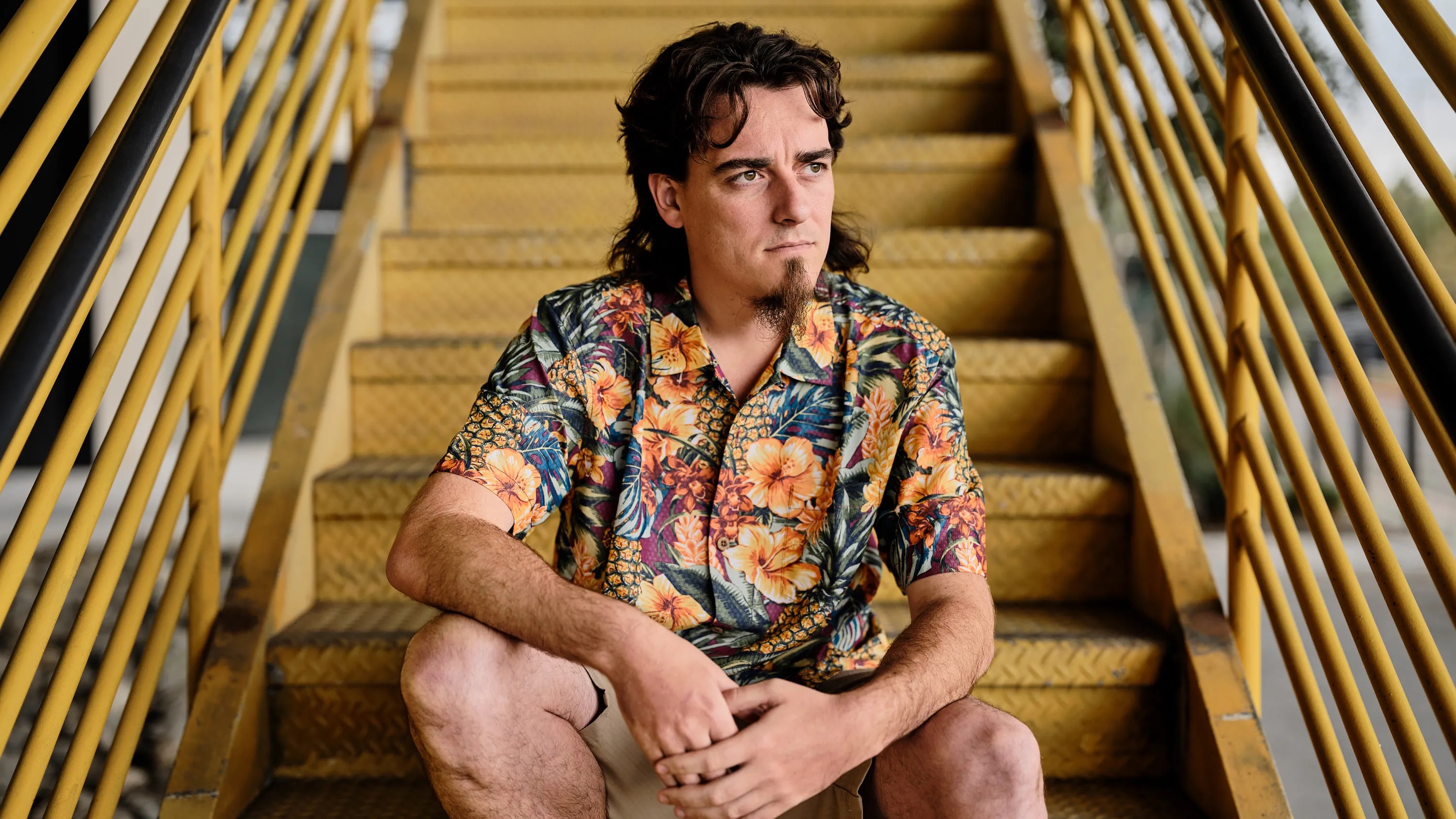
- Anduril Industries is raising $4 billion at a $60 billion valuation in March 2026, making it one of the most valuable private defense companies in U.S. history.
- Palmer Luckey founded Oculus VR at 19, raised $2.4 million on Kickstarter, and sold the company to Facebook for over $2 billion in 2014.
- Luckey was fired from Facebook in 2017 amid political controversy, then founded Anduril three months later with former Palantir executives.
- Anduril won a $20 billion U.S. Army contract in March 2026 and is building Arsenal-1, a five-million-square-foot autonomous weapons factory in Ohio.
A 33-Year-Old Building the Pentagon’s Future
Anduril Industries sits at the center of a generational shift in American defense. The company crossed $500 million in annual revenue in 2025 and is on track to surpass $1 billion in 2026. Its product line spans autonomous drones, AI-powered surveillance towers, and combat systems deployed across four continents. In March 2026, the U.S. Army awarded Anduril a contract worth up to $20 billion — the kind of deal that used to go exclusively to Lockheed Martin or Raytheon.
The man behind it is Palmer Luckey, a 33-year-old who has already lived two Silicon Valley lives. The first made him the poster child of virtual reality. The second is making him the most consequential defense entrepreneur since the Cold War.
A Homeschooled Kid in Long Beach With 50 VR Headsets
Luckey was born on September 19, 1992, in Long Beach, California. His father worked at a car dealership. His mother homeschooled him and his siblings. He took community college courses at Long Beach City College by the time he was 14 — not because he was a prodigy on paper, but because he was bored.
His obsession was electronics. Luckey spent his teenage years collecting broken iPhones, repairing them, and reselling them for parts money. He taught sailing lessons and fixed boats on the side. Every dollar went into his real fixation: head-mounted displays. By 17, he had amassed more than 50 VR headsets — the largest known private collection in the world. None of them were good enough.
So he built his own. Working out of his parents’ garage, Luckey soldered together a prototype with a wider field of view and lower latency than anything on the market. He was 18 years old.
19 Years Old, $2.4 Million on Kickstarter, and John Carmack’s Seal of Approval
In 2012, Luckey posted about his prototype on a VR enthusiast forum. John Carmack — the legendary programmer behind Doom and Quake — asked for a unit. Luckey shipped one for free. Carmack then demonstrated it at E3, the gaming industry’s biggest trade show, running Doom 3 on the headset in front of thousands. The internet lost its mind.
Luckey incorporated Oculus VR in June 2012 and launched a Kickstarter campaign in August. The $250,000 goal was surpassed within 24 hours. By the end, 9,522 backers had pledged $2.4 million — nearly ten times the target. The teenager from Long Beach had a real company.
”Virtual reality, done right, is the final platform. It subsumes all other platforms. Once you have a perfect VR experience, why would you need anything else?” — Palmer Luckey
Facebook agreed. In March 2014, Mark Zuckerberg acquired Oculus VR for $2 billion. Luckey was 21.
Fired at 24: The Exit That Became an Exile
The Facebook years were short. In September 2016, reports emerged that Luckey had donated $10,000 to a pro-Trump political group that paid for a billboard mocking Hillary Clinton. Inside Facebook, the backlash was immediate. Executives reportedly pressured him to publicly voice support for libertarian candidate Gary Johnson instead. Colleagues refused to work with him.
By March 2017, Luckey was out. Facebook said politics had nothing to do with it. Internal emails later obtained by The Wall Street Journal suggested otherwise — the matter had been discussed at the highest levels, including by Zuckerberg himself.
”I was fired. There was no warning, no performance issues, no discussion. I showed up and they told me I was done.” — Palmer Luckey
He was 24, worth hundreds of millions, and unemployable at every major tech company in Silicon Valley. The golden boy of VR had become radioactive.
Three Months Later, a Defense Company Born From Frustration
Luckey did not retreat. In June 2017, he co-founded Anduril Industries with former Palantir executives — the same defense-tech company whose CEO Alex Karp just moved to a $46 million Miami mansion — Trae Stephens, Brian Schimpf, and Matt Grimm, plus early Oculus hardware lead Joseph Chen. The thesis was provocative: the U.S. military was spending trillions on legacy systems built by entrenched contractors, while adversaries moved faster with newer technology.
Anduril’s first product was a surveillance tower called Lattice — an AI-powered sensor system that could autonomously detect and track intruders along the U.S.-Mexico border. The company won its first border security contract within a year of founding. Defense traditionalists scoffed. The Pentagon noticed.
From $1.9 Billion to $60 Billion in Five Years
Growth came fast. Anduril raised a $1.5 billion Series E in 2022 at a $7 billion valuation. By June 2025, a $2.5 billion Series G put the company at $30 billion. Nine months later, in March 2026, the company is raising $4 billion at a $60 billion valuation, led by Andreessen Horowitz and Thrive Capital.
In January 2025, Anduril announced Arsenal-1 — a five-million-square-foot autonomous weapons factory near Columbus, Ohio, backed by $1 billion of internal capital and a $310 million grant from the state. The facility will produce the YFQ-44A Fury combat drone, autonomous ground sensors, and classified weapons systems. Production lines go live in weeks.
”Too many people measure the success of the defense base in terms of dollars. What matters is output. What are you actually building, and how fast can you build it?” — Palmer Luckey
Arsenal-1 Goes Live and the IPO Looms
Anduril’s ambitions extend well beyond one factory. In February 2025, the company took over development of the Army’s Integrated Visual Augmentation System from Microsoft — a contract covering up to 121,000 mixed-reality combat goggles. It won a $9 billion autonomous aircraft program with General Atomics. And the $20 billion Army contract announced in March 2026 is the largest ever awarded to a company less than a decade old.
Luckey has said Anduril will “definitely” go public. The timing remains unclear, but the trajectory does not. A homeschooled kid from Long Beach who built VR headsets in his garage is now reshaping how the most powerful military on Earth fights its wars. The defense industry’s old guard spent decades assuming no outsider could break in. Luckey never got that memo.