
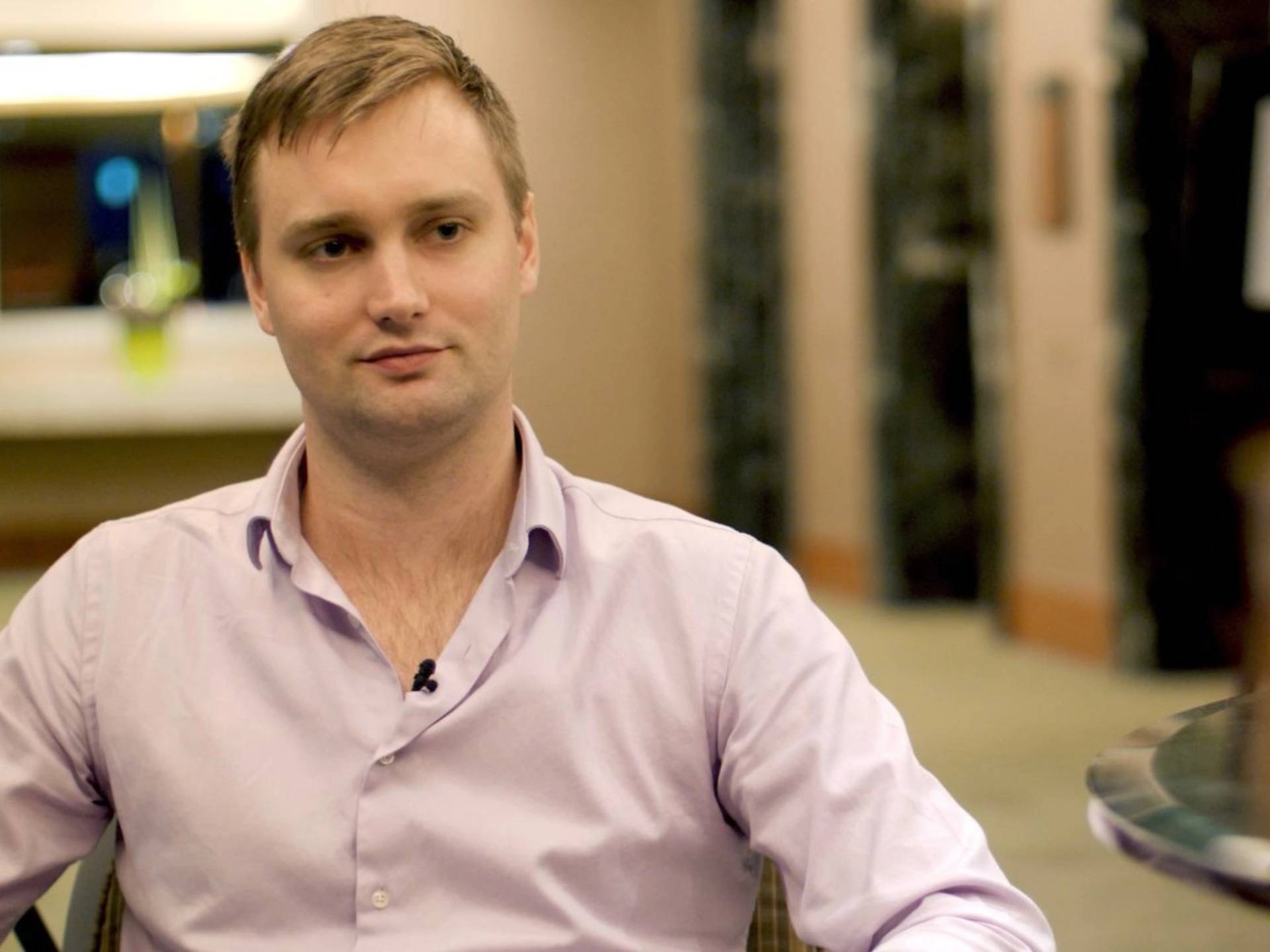
- MakerDAO holds over $7 billion in total value locked, making it one of the largest DeFi lending protocols on Ethereum — now operating under the Sky brand.
- Rune Christensen dropped out of both Copenhagen Business School and the University of Copenhagen to go all-in on crypto after buying his first Bitcoin at $2 in 2011.
- DAI survived Black Thursday in March 2020, when $8.32 million in collateral was liquidated for zero dollars — a near-death moment that reshaped the protocol’s risk architecture.
- The Endgame plan launched in 2024 rebranded Maker to Sky, introduced the USDS stablecoin and SKY governance token, and set a roadmap toward fully decentralized autonomous governance.
$7 Billion Locked and a Protocol That Refuses to Die
Sky, formerly MakerDAO, is the decentralized lending protocol that issues DAI — one of the oldest and most battle-tested stablecoins in crypto. With over $7 billion in total value locked — second only to Stani Kulechov’s Aave — and a 28% share of DeFi lending as of 2025, the protocol has outlasted two crypto winters, a global pandemic-driven market crash, and a class-action lawsuit. DAI has more than $5 billion in circulation. Revenue hit $500 million in 2024 alone, driven by stability fees on collateralized vaults and the DAI Savings Rate, which sits at 4.5% APY.
The man behind all of it is Rune Christensen, a Danish entrepreneur who left Denmark as a teenager, taught English in Beijing, sold his recruiting company to buy Bitcoin, and then spent a decade building the infrastructure for a currency that no government controls. He does not run a company in the traditional sense. He governs a protocol — and the difference matters.
A Dane Who Found Denmark Too Small at 18
Christensen grew up in Copenhagen, but staying there was never the plan. After finishing high school, he skipped university and moved to Beijing. He was 18. Denmark bored him. China did not.
He started teaching English to young children, discovered he was good at it, and quickly turned that skill into a business. He co-founded Try China, a recruiting company that brought Westerners to China to teach. The operation ran from 2011 to 2014. Christensen managed it while bouncing between Copenhagen Business School, where he studied international business, and the University of Copenhagen, where he enrolled in biochemistry. He finished neither degree.
What he did finish was reading everything he could find about Bitcoin. He bought his first coins in 2011 at $2 apiece — years before CZ would build Binance into the world’s largest exchange. By 2014, the recruiting business was profitable but irrelevant to what he actually wanted to build. He sold it and put the proceeds into crypto.
Mt. Gox Collapsed — and Christensen Saw the Missing Piece
The catalyst was not greed. It was frustration. When Mt. Gox, the largest Bitcoin exchange in the world, was hacked and collapsed in early 2014, Christensen watched $450 million in user funds vanish overnight. The problem was clear: crypto was volatile, centralized exchanges were fragile, and there was no stable unit of account native to the blockchain.
”The fundamental factor was how to grow DeFi to gigantic scale, something as big as Tether or even bigger.” — Rune Christensen
He spent the next year studying Ethereum, which was still in development. Vitalik Buterin’s smart contract platform offered something Bitcoin could not — programmable money. Christensen saw a path to building a stablecoin that was not backed by a company or a bank account, but by a system of smart contracts that anyone could audit and no one could shut down.
2015: MakerDAO Launches With Zero Venture Capital
MakerDAO went live in 2015, built entirely on Ethereum. The concept was radical: users could lock up ETH as collateral and mint DAI, a token pegged to one US dollar. No bank. No reserve account. No trust required. The system used automated liquidation mechanisms to maintain the peg — if collateral values dropped below a threshold, the protocol would auction off assets to cover the debt.
The early years were slow. DAI launched as a single-collateral system in December 2017, accepting only ETH. Multi-Collateral DAI followed in November 2019, expanding the range of accepted assets. By early 2020, MakerDAO had become the cornerstone of DeFi — the largest protocol on Ethereum by total value locked, with hundreds of millions in DAI in circulation.
Then the world shut down.
Black Thursday: $8.32 Million Liquidated for Zero Dollars
On March 12, 2020, COVID-19 panic gutted global markets. ETH fell 43% in a single day. The Ethereum network choked under transaction volume, gas prices spiked, and MakerDAO’s liquidation auctions — designed to protect the system — broke. Liquidation bots could not submit bids fast enough. A handful of actors exploited the congestion and won auctions at a bid price of zero, walking away with $8.32 million in ETH for free.
The protocol was left with $5.67 million in bad debt. Emergency shutdown — which would have annihilated all DAI in circulation — was on the table. Christensen and the governance community chose to fight. They minted and auctioned new MKR tokens to recapitalize the system, and in a controversial move, added USDC as an accepted collateral type. A centralized stablecoin backing a decentralized one. Purists hated it. It worked.
”Take the benefits of the technology and bring it to the mass market.” — Rune Christensen
A class-action lawsuit followed, with up to 3,000 investors alleging the Maker Foundation had misrepresented the risks. The case settled for $1.16 million in 2023. MakerDAO survived. DAI held its peg.
From MakerDAO to Sky: a Rebrand That Split the Community
By 2023, Christensen was thinking bigger. The Endgame plan, first proposed in May 2023, called for a complete overhaul of MakerDAO’s governance, tokenomics, and brand. The protocol would break itself into smaller, independent units called Stars — each with its own token and mandate. The goal was to make governance sustainable at scale, not dependent on a single founder’s vision.
On September 18, 2024, MakerDAO officially rebranded to Sky. DAI became upgradeable to USDS. MKR became convertible to SKY. The rebrand was not universally loved — just four entities accounted for nearly all the votes to keep the new name, and Christensen himself hinted the change might be reversed after community pushback. One year in, adoption of the new tokens has lagged behind the original vision. But the structural changes — Stars, modular governance, institutional-grade capital layers — are moving forward.
”Sky is evolving from just offering a stablecoin to offering the more general value of supporting capital formation.” — Rune Christensen
The Endgame Is a Two-Year Bet on Decentralized Governance
Christensen frames the next phase as a “two-year” roadmap. Sky has expanded to Solana, with plans for a dedicated blockchain — codenamed NewChain — built on a fork of Solana’s codebase. Ecosystem units like Spark and Grove are embedding USDS as a super-senior capital layer. The DSR remains competitive at 4.5% APY. And the protocol continues to generate hundreds of millions in annual revenue without a CEO, a board, or a headquarters.
Christensen is 42 years old. He has spent more than a decade building a financial system that is designed to outlive him. Whether it carries the name Maker or Sky matters less than whether it carries the peg. So far, through crashes, exploits, lawsuits, and rebrands, DAI has held at one dollar. That is the whole point.