
- Evervault has raised $46 million in total funding, processes over $5 billion in annual transaction volume, and generates more than 100 million encrypted tokens per month.
- Shane Curran won Ireland’s BT Young Scientist competition at 16, landed on Forbes 30 Under 30 at 17, and founded Evervault at 18.
- The company’s $25 million Series B closed in March 2026, led by Ribbit Capital with Sequoia Capital, Index Ventures, and Kleiner Perkins participating.
- Evervault serves hundreds of enterprise customers including Ramp, Rippling, and Uniswap, cutting PCI compliance costs by an average of $100,000 per client.
$5 Billion in Encrypted Transactions and a 25-Year-Old at the Helm
Evervault processes over $5 billion in annual transaction volume. Its encryption infrastructure sits between companies and their most sensitive data — card numbers, personal records, regulated information — ensuring none of it ever exists in plaintext on a client’s servers. Through more than 7,000 integrations with banks and financial institutions, the Dublin-based company has become the invisible security layer behind payments at hundreds of enterprises.
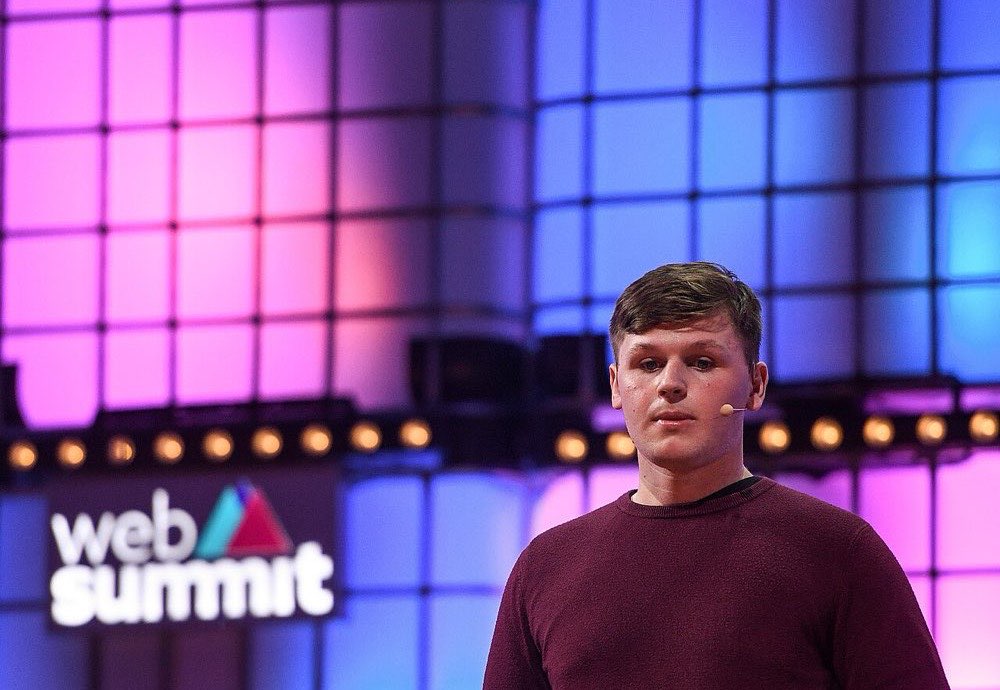
The person who built it is Shane Curran, now 25. He started programming at seven, won Ireland’s most prestigious science competition at 16, and dropped out of college after a few days to chase a vision most adults in the room thought was premature. They were wrong.
A Six-Year-Old Installing Linux in Dublin
Curran grew up in Dublin’s Terenure neighborhood. His first Linux install happened at age six. By seven, he was writing basic programs. By 11, he was fluent in PHP, C, C++, Java, Python, Ruby, Perl, and Bash — a stack most professional developers take years to accumulate.
He wasn’t a prodigy in the theatrical sense. He was simply obsessed. While other kids collected football cards, Curran collected programming languages. School bored him. Computers did not.
”Given the space, teens can make significant products. People underestimate what young people can build when they’re genuinely curious.” — Shane Curran
That curiosity had a direction. By his mid-teens, Curran was deep into cryptography — specifically, the problem of keeping data safe in a world where quantum computing threatened to break every existing encryption standard.
Winning BT Young Scientist at 16 With a Quantum Encryption Platform
In January 2017, Curran walked into the BT Young Scientist and Technology Exhibition — Ireland’s most competitive science fair, a national institution watched by millions — with a project called qCrypt. It was a quantum-secure, encrypted data storage platform with multi-jurisdictional quorum sharing technology. He was 16 years old.
He won. Not a category prize. The whole thing. The judges named him BT Young Scientist and Technologist of the Year 2017. A year later, Forbes put him on its 30 Under 30 list. He was 17, one of the youngest people ever featured.
Curran briefly enrolled in a business and law degree at University College Dublin. He lasted a few days. The pull of building something real was too strong.
The Frustration That Launched Evervault
The qCrypt project taught Curran something that would define his career: encryption was powerful, but nobody made it easy. Developers building apps and payment systems faced a brutal choice — spend months implementing proper encryption, or skip it and hope for the best. Most chose the latter. The result was a data breach every other week.
”We think it’s embarrassing for technology that not a week goes by without a data breach. Our goal is to reduce the number of plaintext data breaches to zero.” — Shane Curran
In 2018, at 18, Curran founded Evervault with a radical premise: encryption should be a default, not an afterthought. Developers should be able to encrypt sensitive data with a single API call, process it without ever seeing it in plaintext, and never worry about compliance again.
Coffee With Sequoia: A $3.2 Million Seed at 19
Curran’s pitch landed him meetings in Silicon Valley. After visiting Andreessen Horowitz, he woke up the next morning to an email with a subject line that read: “Coffee with Sequoia?” Within a week, Sequoia Capital made an offer. Within another week, the deal closed. Evervault had $3.2 million in seed funding, with Kleiner Perkins, Frontline Ventures, and SV Angel also participating.
He was 19. The round attracted angel investors including Jeff Weiner, then CEO of LinkedIn, and Dylan Field, CEO of Figma. The caliber of backers signaled something: this wasn’t a teenager’s side project. It was a company that serious operators believed could reshape how the internet handles data.
From Developer Tool to Enterprise Encryption Layer
In May 2020, Evervault closed a $16.4 million Series A led by Index Ventures, with Sequoia and Kleiner Perkins doubling down. The round also brought in Alex Stamos, Facebook’s former chief security officer, and Olivier Pomel, CEO of Datadog.
The company shifted its focus toward card payments — the single largest use case for sensitive data processing. Evervault built an encryption layer that lets companies collect, route, and process card data without it ever touching their own infrastructure. On average, customers cut PCI DSS compliance costs by $100,000, achieve compliance 95% faster, and ship secure payment systems in days rather than weeks. The approach mirrors the developer-first model that WorkOS used to raise $100 million at a $2 billion valuation — abstracting enterprise complexity into clean API calls. CarTrawler, Ramp, Rippling, Overwolf, and Uniswap became customers.
Over the past year, Evervault achieved more than four times year-over-year revenue growth. The 100 million encrypted tokens it generates each month are proof that Curran’s thesis — encryption as infrastructure, not overhead — has found its market.
$46 Million Raised, and an Internet Still Worth Encrypting
In March 2026, Evervault closed a $25 million Series B led by Ribbit Capital, bringing total funding to $46 million. The capital will go toward expanding the engineering team and deepening the product’s integration network beyond payments into healthcare, identity verification, and AI data pipelines.
”European privacy regulation is just antitrust in a trench coat. The real answer is encryption, not regulation.” — Shane Curran
Curran is 25 now. He has spent nearly half his life building encryption tools. The kid who installed Linux at six is running a company that processes billions in transactions for some of the fastest-growing fintechs on the planet. The internet still leaks data every week. Curran is still trying to make that impossible.