
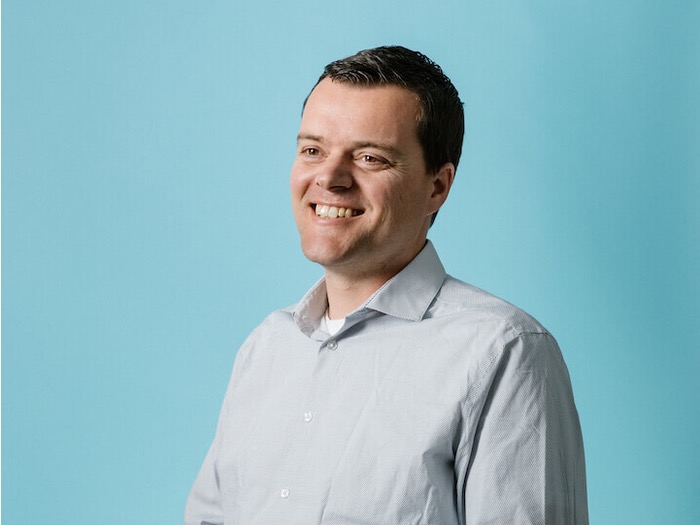
- GitLab is a DevSecOps platform used by over 30 million developers, generating $955 million in annual revenue in fiscal year 2026.
- Sid Sijbrandij co-founded GitLab Inc. in 2014 with Ukrainian developer Dmitriy Zaporozhets, building the world’s largest all-remote company with no offices from day one.
- GitLab IPO’d on Nasdaq in October 2021 at a $14.9 billion market cap, making Sijbrandij a billionaire with a $2.8 billion fortune.
- In December 2024, Sijbrandij stepped down as CEO to focus on his health and launched Kilo Code, an open-source AI coding agent that raised $8 million in seed funding.
Over 30 million developers push code through GitLab every day. The platform covers the entire software lifecycle — from planning to security to deployment — in a single application. In fiscal year 2026, it crossed $955 million in annual revenue, up 26% year-over-year. The company that built it has never had an office.
Behind GitLab is Sid Sijbrandij, a Dutch entrepreneur who spent his twenties building submarines, taught himself to code in his thirties, and took a $15 billion company public before turning 45. His story starts far from Silicon Valley — in a university town in the eastern Netherlands.
A Physics Student Who Switched to Business Before He Finished His First Year
Sytse Sijbrandij — Sid to everyone who works with him — enrolled at the University of Twente in 1997 to study Applied Physics. It lasted one year. The coursework humbled him. He wasn’t built for theoretical physics, and he knew it fast enough to pivot.
He switched to Management Science, a program that mixed engineering rigor with business strategy. At Twente, the culture rewarded builders. Sijbrandij partnered with a fellow student who sold infrared receivers, helping bring the product to international markets. It was small-scale commerce, but it taught him something he would carry for the next two decades: the best way to learn business is to do business.
”When you write things down, you can iterate on them, make them better and pass it on to the next generation.” — Sid Sijbrandij
Four Years Building Submarines, Then a Career Left Turn Into Code
After graduating in 2003, Sijbrandij took a job that had nothing to do with software. He joined U-Boat Worx, a Dutch company that builds recreational submarines for yacht owners and marine researchers. He spent four years there, constructing the first onboard computer for the company’s submersibles.
The pitch he used to get the job was pure Sijbrandij: he told the founders he had a standing offer from IBM, and if they didn’t hire him, he’d take it. They hired him. But submarines were not his future. In 2007, Sijbrandij encountered Ruby code for the first time — and something clicked. He taught himself to program, spending nights and weekends writing scripts while holding down a day job at the Dutch Ministry of Justice, where he worked on web applications for lawmaking.
A Hacker News Post While Making Pancakes Changed Everything
In 2012, Sijbrandij stumbled on a Hacker News link about an open-source project called GitLab — a collaboration tool for developers built by Dmitriy Zaporozhets, a programmer working from a house in Ukraine that didn’t have running water. Zaporozhets saw the lack of a good collaboration tool as a bigger problem than his daily trip to the communal well.
Sijbrandij was making pancakes for dinner when he posted a link on Hacker News inviting people to sign up for a hosted version of GitLab. It hit the front page. Over 150 people signed up within three hours. He emailed Zaporozhets to tell him he was going to commercialize the product. The response was simple: “Great. Thanks for doing that."
"Working remotely is easy. The challenge is working asynchronously.” — Sid Sijbrandij
Sijbrandij funded the early days with Bitcoin profits — he had ridden the first wave from $50 to $850, netting roughly $100,000. He used it to sponsor Zaporozhets full-time. By 2014, they incorporated GitLab Inc., and Zaporozhets became co-founder and CTO.
Y Combinator, Zero Offices, and a 2,700-Page Handbook
In 2015, GitLab joined Y Combinator’s Winter batch. The co-founders lived 2,000 kilometers apart. Their first hire was in Serbia. Nobody wanted to relocate, so GitLab became all-remote by default — not ideology, just logistics.
What started as a practical choice became a strategic advantage. GitLab could hire the best person for every role regardless of geography. The company codified everything into a public handbook — now over 2,700 web pages — covering every process from onboarding to one-on-ones. Transparency wasn’t a value statement. It was the operating system.
By 2018, GitLab had 700 employees in 65 countries and $10.5 million in revenue, landing on the Inc. 5000 list. The all-remote model, once seen as an experiment, became the blueprint that thousands of companies would copy when COVID-19 forced everyone home in 2020.
October 14, 2021: GitLab Opens at $94 on Nasdaq
GitLab priced its IPO at $77 per share on October 13, 2021, valuing the company at roughly $11 billion. The next morning, it opened at $94.25 and closed at $103.89 — a 35% first-day pop that pushed the market cap to $14.9 billion. Sijbrandij’s stake was worth $2.8 billion.
It was the largest IPO for a fully remote company in history. No headquarters ribbon-cutting. No bell-ringing photo op with 500 employees crammed onto a trading floor. Sijbrandij rang the Nasdaq bell from a studio, with team members watching from 67 countries.
”Remote work is just work.” — Sid Sijbrandij
The IPO validated more than GitLab’s product. It proved that a company with no offices, no water-cooler culture, and no in-person management rituals could compete with — and in many cases outperform — the biggest names in enterprise software, including Microsoft’s GitHub, now led through its AI revolution by Thomas Dohmke.
From CEO to Executive Chair: Cancer, a New Startup, and Unfinished Business
In December 2024, Sijbrandij stepped down as CEO. The reason was not strategic — it was medical. He had been diagnosed with osteosarcoma, a form of bone cancer. He transitioned to executive chair and handed the CEO role to Bill Staples, a former New Relic chief.
True to form, Sijbrandij approached his diagnosis with radical transparency. In a Substack post titled “I’m going Founder Mode on my cancer,” he shared treatment data, research, and his plan to build tools that make the path easier for other patients. The cancer is not metastatic. He remains optimistic about a full recovery.
And he hasn’t stopped building. In December 2025, Sijbrandij launched Kilo Code, an open-source AI coding agent that works with over 500 AI models — entering the same vibe-coding market that is reshaping software development. The company raised $8 million in seed funding from General Catalyst, Cota Capital, and others. It is, naturally, fully remote — 30 people across North America and Europe, with coworking hubs in Amsterdam and San Francisco.
The Man Who Proved You Don’t Need an Office to Build a Billion-Dollar Company
GitLab today generates nearly $1 billion in annual revenue. Sijbrandij’s other venture, Open Core Ventures, has launched more than 10 companies around open-source projects. And Kilo Code is his bet that the next era of software development will be agentic — powered by AI, model-agnostic, and open by default.
From a physics dropout in the Netherlands to a submarine builder, a self-taught Ruby programmer, and the founder of one of the most consequential developer platforms in the world, Sijbrandij has spent his career proving one thing: you don’t need to be in the room. You just need to write it all down and ship.