
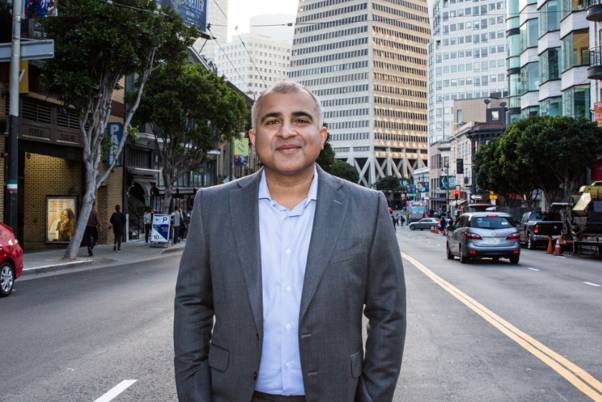
- Project Prometheus launched in November 2025 with $6.2 billion in funding and a mandate to bring AI into manufacturing, aerospace, and industrial engineering.
- Vik Bajaj serves as co-founder and co-CEO alongside Jeff Bezos, driving scientific vision and large-model engineering for the venture.
- Bajaj co-founded Verily (formerly Google Life Sciences) at Google X and served as chief scientific officer at GRAIL, the cancer-detection company acquired by Illumina for $8 billion.
- Project Prometheus has hired over 120 researchers from OpenAI, DeepMind, and Meta, and is expanding to offices in Zurich and London in 2026.
$6.2 Billion, 120 Researchers, and a Plan to Rewire Industry
Project Prometheus is not another large language model company. The startup, unveiled in November 2025, launched with $6.2 billion in initial capital and a thesis that most of Silicon Valley has ignored: AI’s biggest opportunity is not in chatbots or code generation — it is in the physical world. Factories, rockets, automobiles, semiconductor fabs. The company has already hired over 120 researchers poached from OpenAI, DeepMind, and Meta, with offices open in San Francisco and new outposts in Zurich and London.
At the helm, sharing the CEO title with Jeff Bezos, is Vikram “Vik” Bajaj — a Canadian-American scientist whose career reads like a bridge between two worlds that rarely overlap. Before Prometheus, Bajaj spent fifteen years at the intersection of biology, AI, and frontier science, building companies that turned laboratory insights into billion-dollar outcomes. His path to co-running the most talked-about AI startup on the planet started in a chemistry lab at MIT.
A Biochemist Who Chose the Lab Over the Lecture Hall
Bajaj earned a combined bachelor’s and master’s degree in biochemistry from the University of Pennsylvania, then moved to MIT for a PhD in physical chemistry. His doctoral work focused on advanced spectroscopy — the kind of deep, instrument-heavy research that most people leave behind for a tenure-track position.
Bajaj left academia instead. He completed a postdoctoral fellowship at UC Berkeley, but his interests were already drifting away from pure research and toward the question that would define his career: how do you turn scientific measurement into products that change outcomes at scale?
”It is hard to create a machine learning company for the life sciences without the crucible of product development in the company. If you do that, you begin to ask the wrong questions.” — Vik Bajaj
That conviction — that science without product discipline is just science — would guide every move he made next.
Inside Google X: Drones, Self-Driving Cars, and the Birth of Verily
In March 2013, Bajaj joined Google X, the moonshot lab run under Alphabet. He did not join as an advisor or a consultant. He co-founded Google Life Sciences, became its chief scientific officer, and worked directly with Google co-founder Sergey Brin on some of the lab’s most ambitious early bets — including the drone delivery program that became Wing and the self-driving car project that became Waymo.
Google Life Sciences was rebranded as Verily in 2015, and Bajaj stayed on as founding CSO until October 2016. By the time he left, Verily was a standalone Alphabet subsidiary valued at billions, running clinical studies, building surgical robots, and deploying AI-powered health diagnostics. Bajaj had helped build one of the most consequential health-tech companies in existence — and he was 40.
GRAIL, Illumina, and the $8 Billion Cancer Bet
Bajaj’s next move was GRAIL, a biotechnology spinoff from genome-sequencing giant Illumina. The company’s mission was staggeringly ambitious: detect cancer from a simple blood draw before symptoms ever appear. Bajaj joined as chief scientific officer in 2016 and helped shape the scientific foundation for GRAIL’s multi-cancer early detection test.
He left the CSO role in 2017 but remained on GRAIL’s scientific advisory board until 2021, when Illumina acquired the company for $8 billion. Two companies Bajaj helped build — Verily and GRAIL — would each reach valuations in the billions. The pattern was clear: find a problem at the frontier of science, assemble the best team, build the product, and move on before the bureaucracy sets in.
”Data is definitely a competitive moat.” — Vik Bajaj
Foresite Labs: Investing at the Edge of Biology and AI
In October 2017, Bajaj became managing director at Foresite Capital, a healthcare-focused investment firm. A year later, he co-founded Foresite Labs, an AI-driven research incubator built to accelerate the convergence of machine learning and biology. He also joined the faculty at Stanford University School of Medicine as a professor, splitting his time between running a company and training the next generation of computational biologists.
Foresite Labs operated at the exact boundary that most investors and most scientists avoid: too technical for venture capital, too commercial for academia. Bajaj spent seven years there, backing and building companies that applied AI to drug discovery, genomics, and clinical trials. It was the ideal preparation for what came next.
November 2025: Bezos Calls, and Prometheus Is Born
When Jeff Bezos decided to re-enter the arena as a company builder — not just an investor — he needed a co-CEO who could match his ambition with scientific depth. He found Bajaj. The partnership was announced in November 2025 alongside $6.2 billion in funding, making Project Prometheus one of the best-funded startups in history on day one.
The division of labor is stark. Bezos shapes business direction and growth strategy. Bajaj drives scientific vision, technical decisions, and large-model engineering. The company’s focus — applying AI to physical tasks through systems that learn from real-world trial and error, not just internet-scale text data — is a direct extension of everything Bajaj has built over the past fifteen years.
”Clinical trials will be launched in the next year or two to test predictions about causal biology made by artificial intelligence models.” — Vik Bajaj
The same talent war is reshaping labs like Anthropic and OpenAI. Within months of launch, Prometheus had poached top researchers from every major AI lab in the world and opened its Zurich office to tap into Europe’s deep bench of industrial engineering talent.
From Zurich to the Factory Floor: What Comes Next
In March 2026, reports surfaced that Bezos is seeking $100 billion from major asset managers to acquire manufacturing companies and integrate AI into their operations through Prometheus. If that fund materializes, the startup will not just build AI tools — it will own the factories that use them.
For Bajaj, the logic is the same as it was at Verily, at GRAIL, at Foresite Labs. Science does not matter until it touches the real world. Models do not matter until they make something physical better, faster, or cheaper. The difference now is scale. At Prometheus, the lab is a factory, the patient is an industry, and the co-pilot is the richest person on the planet.
The scientist who spent two decades bridging biology and computation is now trying to bridge AI and the physical economy. If he succeeds, Prometheus will not just be the best-funded AI startup — it will be the one that proved software can reshape steel.