
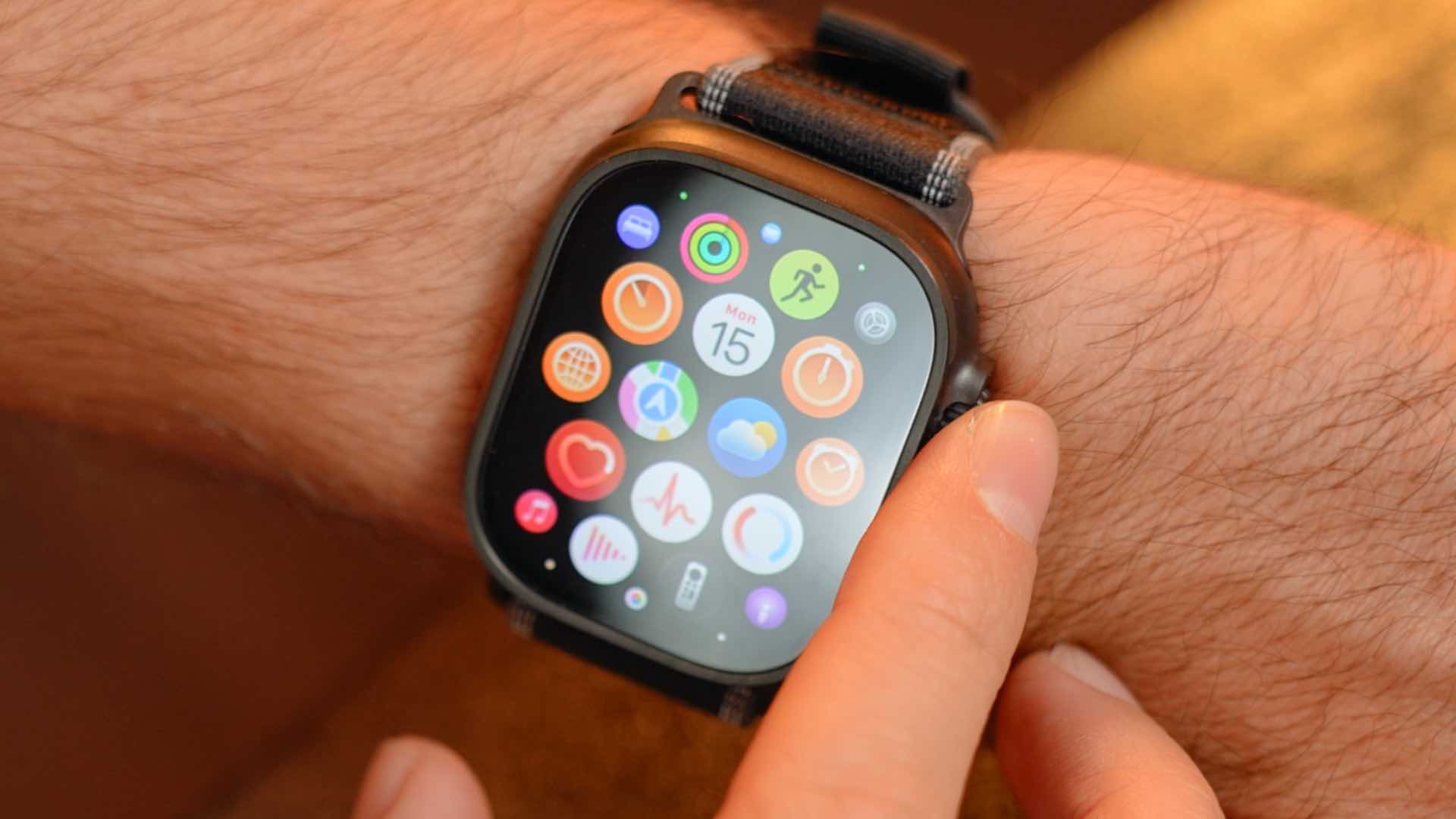
- Apple Watch Series 11 starts at $399 with 24-hour battery life, blood pressure monitoring, and a 2,000-nit display.
- Apple Watch Ultra 3 delivers 42 hours of battery (72 in Low Power Mode), satellite connectivity, and a 3,000-nit screen for $799.
- Apple Watch SE 3 undercuts the lineup at $249 with the same S10 chip and always-on display — but no blood pressure or ECG.
- All three models run the S10 chip, support 5G cellular, and track sleep apnea.
Apple sells three watches in 2026 and all three are genuinely good. The problem is figuring out which one is worth your money. The Apple Watch lineup now covers a $249 to $799 range, with overlapping features that make the decision harder than it should be. Here is what actually matters.
| Model | Price (from) | Battery | Display | Best For |
|---|---|---|---|---|
| Series 11 | $399 | 24h (38h LPM) | 2,000 nits | Most people |
| Ultra 3 | $799 | 42h (72h LPM) | 3,000 nits | Athletes, outdoors |
| SE 3 | $249 | 18h (32h LPM) | 1,000 nits | Budget buyers |
| Series 10 | ~$299 (disc.) | 18h (36h LPM) | 2,000 nits | Discounted value |
Apple Watch Series 11: The One Most People Should Buy
The Series 11 is Apple’s best all-around smartwatch and the default recommendation for 2026. It starts at $399 for the 42mm aluminum GPS model and tops out at $749 for the 46mm titanium with cellular. The headline upgrade over last year’s Series 10 is battery life — 24 hours of normal use, up from 18. That single change eliminates the most persistent complaint about Apple Watch ownership.
Health tracking is where the Series 11 pulls away from the SE 3. Hypertension notifications — Apple’s long-awaited blood pressure monitoring feature — are exclusive to the Series 11 and Ultra 3. The watch also packs an ECG sensor, blood oxygen monitoring, temperature sensing for cycle tracking, and sleep apnea detection. The display pushes 2,000 nits, and Apple claims the new Ion-X glass on the aluminum model is twice as scratch-resistant as the Series 10. Storage is 64GB across all configurations.
The only real question is whether you need cellular. For $50 more per size, you get standalone calls, texts, and streaming without your iPhone. If you run or work out without your phone, it is worth it. If not, GPS-only saves you the monthly carrier fee too.
Apple Watch Ultra 3: 72 Hours of Battery and Satellite SOS
The Ultra 3 exists for people who need a watch that refuses to die. At 42 hours of normal use — stretching to 72 hours in Low Power Mode — it is the only Apple Watch that can survive a long weekend without a charger. The 49mm titanium case is built for trail runners, divers, and anyone who treats their watch like outdoor equipment. It is water resistant to 100 meters with a depth gauge rated to 40 meters.
At $799, the Ultra 3 costs twice as much as the Series 11 and the core health features are identical — same S10 chip, same hypertension monitoring, same ECG and blood oxygen sensors. What you pay for is durability, battery, a 3,000-nit display that stays readable in direct sunlight, dual-frequency GPS for better accuracy in canyons and dense forests, and satellite connectivity for emergency SOS when you have no cell signal. If none of that matters to your daily life, the Series 11 does everything else just as well.
Apple Watch SE 3: Same Chip, Half the Price
The SE 3 is the sleeper of the lineup. At $249, it runs the same S10 chip as the Series 11 and Ultra 3, which means apps launch just as fast, Siri responds just as quickly, and workout tracking is just as smooth. Apple finally added an always-on display to the SE line — a feature that was exclusive to the premium models until now. That alone makes the SE 3 a dramatically better watch than its predecessor.
The trade-offs are real but specific. No hypertension alerts. No ECG. No blood oxygen. No electrical heart sensor. The display maxes out at 1,000 nits — fine indoors, occasionally dim outside. Battery life is 18 hours, which means daily charging is non-negotiable. Storage is 32GB instead of 64GB. For fitness tracking, notifications, Apple Pay, and sleep monitoring, the SE 3 handles all of it. For health-obsessed users who want the full sensor suite, the Series 11 is worth the $150 premium.
Should You Buy a Discounted Series 10 Instead?
The Series 10 is still available at steep discounts — often around $299 — and it shares the S10 chip with every current model. It has the full health sensor suite including blood pressure monitoring, ECG, and blood oxygen. The only meaningful downside compared to the Series 11 is battery life: 18 hours versus 24. If that gap does not bother you, the Series 10 at a discount is arguably the best value in the entire Apple Watch lineup right now. Check Best Buy and Amazon for current pricing.
The bottom line: the Series 11 is the right watch for most people. The Ultra 3 is for athletes and adventurers who need multi-day battery. The SE 3 is a genuine bargain that no longer feels like a compromise. And the discounted Series 10 quietly beats all of them on value.
Compare all models | Source: Business Insider | Source: Tom’s Guide | Source: Engadget