
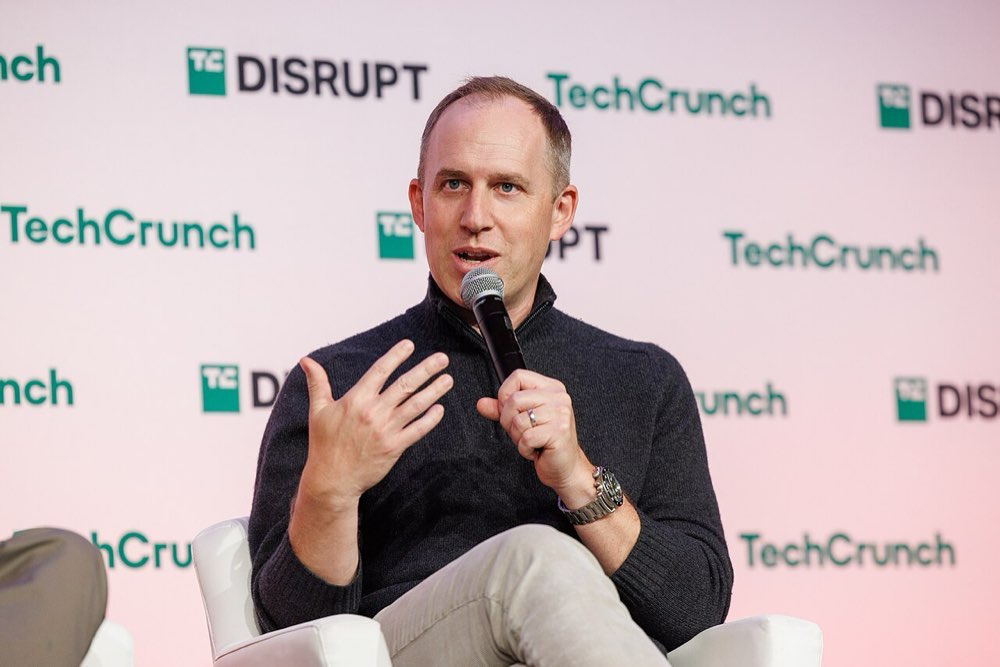
- Sierra hit $100 million in annual recurring revenue in under two years, with a $10 billion valuation after raising $350 million in September 2025.
- Bret Taylor co-created Google Maps, invented Facebook’s Like button, co-founded Quip, and served as co-CEO of Salesforce before launching Sierra.
- Taylor chairs OpenAI’s board of directors, appointed in November 2023 after the Sam Altman firing crisis to stabilize the organization.
- Sierra’s AI agents serve customers for WeightWatchers, SiriusXM, Sonos, ADT, and dozens of major brands, replacing traditional call centers with conversational AI.
$10 Billion in Two Years: Sierra Rewrites the AI Playbook
Sierra is the fastest-growing enterprise AI company in a generation. Founded in February 2023 by Bret Taylor and former Google executive Clay Bavor, the company builds AI agents that handle customer interactions for some of the world’s largest brands. By November 2025, Sierra reached $100 million in annual recurring revenue — seven quarters after its public launch.
The numbers tell a steep trajectory. A $110 million seed round in early 2024. A $175 million raise in October 2024 that valued the company at $4.5 billion. Then a $350 million round led by Greenoaks Capital Partners in September 2025 that doubled the valuation to $10 billion. Sierra’s client list reads like a Fortune 500 roster: WeightWatchers, SiriusXM, Sonos, Rivian, ADT, Cigna, and Discord all use its platform.
Behind this rocket-ship growth sits a 45-year-old who has already built or reshaped four major tech products. Bret Taylor is the rare founder who doesn’t need to prove anything — and that’s exactly why investors keep writing checks.
Stanford, 2003: A Computer Science Student Who Shipped Google Maps
Taylor grew up in Northern California and studied computer science at Stanford, earning both his bachelor’s and master’s degrees by 2003. He joined Google immediately after graduation as an associate product manager — one of the company’s earliest APM hires in a program that would later produce a generation of Silicon Valley leaders.
At Google, Taylor led the team that created Google Maps. The product launched in 2005 and fundamentally changed how billions of people navigate the world. He was 24 years old. Most engineers spend entire careers without shipping something at that scale. Taylor did it before he turned 25.
FriendFeed, Facebook, and the Like Button That Changed Social Media
In 2007, Taylor left Google to co-found FriendFeed, a social aggregation platform that pulled content from across the web into a single feed. The concept was ahead of its time — essentially predicting the algorithmic timeline that would later dominate every social network.
Facebook acquired FriendFeed in 2009 for an estimated $50 million. Taylor joined as CTO and brought with him an idea that would reshape the internet: the Like button. What started as a simple interaction mechanic became the foundational engagement metric for social media, copied by every platform that followed.
”The Like button was really about giving people a lightweight way to acknowledge something without having to write a comment. It turned out to be one of those things that changed user behavior at a massive scale.” — Bret Taylor
Taylor served as Facebook’s CTO until 2012, overseeing the platform’s technical infrastructure during its most explosive growth period — from 300 million to over 1 billion users.
Salesforce, OpenAI, and the Two Weeks That Shook Silicon Valley
After Facebook, Taylor founded Quip in 2012, a collaborative productivity tool that competed with Google Docs. Salesforce acquired Quip in 2016 for $750 million, and Taylor stayed on. By 2021, Marc Benioff had named him co-CEO — the first person to share that title in Salesforce’s history.
Taylor stepped down in January 2023, but he wasn’t heading for retirement. Within weeks, he had co-founded Sierra with Clay Bavor. And then, in November 2023, the phone rang again. OpenAI’s board had just fired Sam Altman — and the resulting chaos threatened to destroy the most important AI company on the planet.
Taylor was appointed chairman of OpenAI’s reconstituted board, alongside Larry Summers and Adam D’Angelo. His job was simple: stabilize the organization and bring Altman back. He did both within days. The episode remains one of the defining moments in AI history — and one that elevated Taylor’s reputation as the adult in the room.
”We have unanimously concluded that Sam and Greg are the right leaders for OpenAI.” — Bret Taylor, statement as OpenAI Board Chairman
He remains chairman of OpenAI’s board today while running Sierra full-time — a dual role that gives him unmatched visibility into how AI models are built and how they should be deployed.
Building Sierra: AI Agents That Replace the Call Center
Sierra launched publicly in February 2024 with a thesis that most AI companies had overlooked: the customer experience is broken, and large language models can fix it. Not chatbots that deflect questions. Not FAQ search bars. Full autonomous AI agents that handle real customer problems — processing returns, managing subscriptions, troubleshooting products — in natural conversation.
The platform works across text and voice. By September 2025, voice interactions had overtaken text as Sierra’s primary channel. WeightWatchers reported that Sierra’s agent handled nearly 70% of all customer sessions, earning a 4.6 out of 5 satisfaction score. These are numbers that most human call centers never reach.
”Conversational AI will become the dominant form factor that people use to interact with brands — not just for customer service, but for all aspects of the customer experience.” — Bret Taylor
The business model itself is a departure. Sierra charges based on outcomes — problems resolved, not seats licensed. It’s a bet that AI companies should eat the risk alongside their customers, and the $100 million ARR milestone suggests the bet is paying off.
From $110 Million Seed to $10 Billion: The Funding Arc
Sierra’s fundraising story reflects how quickly conviction can compound. The $110 million seed round in early 2024 was already extraordinary — one of the largest seed rounds in Silicon Valley history. Sequoia Capital and Benchmark led early rounds, followed by ICONIQ and Greenoaks.
The October 2024 raise at a $4.5 billion valuation came less than a year after launch. The September 2025 round at $10 billion came less than a year after that. Each round doubled the valuation — a pace that puts Sierra alongside the most valuable private AI companies in the world.
Taylor’s track record is the moat. Investors aren’t just betting on the product — they’re betting on a founder who has built category-defining products at Google, Facebook, and Salesforce, and who sits at the center of the AI ecosystem as OpenAI’s board chairman.
What’s Next: A Personalized Concierge for Every Brand
Taylor’s vision for Sierra extends far beyond customer support. He sees a future where every consumer has a personalized AI concierge for every brand they interact with — an agent that knows their history, anticipates their needs, and handles complexity that today requires navigating five different web pages and a 40-minute hold time.
The competitive landscape is crowded. Cognigy, Intercom — fresh off a $250 million raise for its Fin AI agent, and a wave of AI-native startups are all chasing the same enterprise customer experience market. But Sierra has something none of them do: a founder who helped build the modern internet, a $10 billion war chest, and a direct line to the models that power it all.
The next frontier is voice-first AI agents that don’t just answer questions but take real actions — booking flights, negotiating contracts, managing entire customer lifecycles. If Taylor gets it right, the call center as we know it disappears within five years. Given his track record, betting against him would be unwise.