
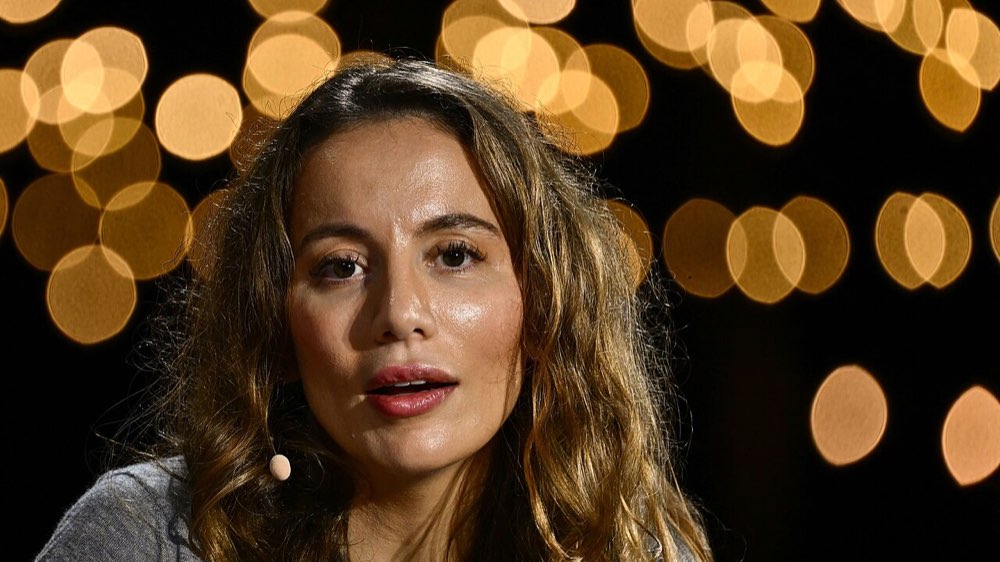
- Thinking Machines Lab raised $2 billion at a $12 billion valuation in the largest seed round in history, backed by Andreessen Horowitz, Nvidia, and Accel.
- Mira Murati served as OpenAI’s CTO for six years, overseeing the launch of ChatGPT and DALL-E before departing in September 2024.
- In November 2023, Murati briefly became OpenAI’s interim CEO during the board crisis that ousted Sam Altman.
- In March 2026, Thinking Machines Lab signed a gigawatt-scale compute deal with Nvidia to deploy Vera Rubin systems for frontier model training.
A Gigawatt of Ambition and a $12 Billion Bet
Mira Murati is no longer building someone else’s vision. In March 2026, Thinking Machines Lab — the company she founded thirteen months earlier — announced a multiyear partnership with Nvidia to deploy at least a gigawatt of Vera Rubin compute. That is 33 times the compute used to train GPT-4, enough to power a major American city.
The deal came on the heels of a record-shattering $2 billion seed round led by Andreessen Horowitz, with participation from Nvidia, Accel, AMD, and the government of Albania. At a $12 billion post-money valuation, it was the largest seed funding round in history. By November 2025, Bloomberg reported the company was in talks to raise an additional $5 billion at a $50 billion valuation.
But the numbers only tell part of the story. To understand how a 37-year-old Albanian-American engineer ended up running one of the most ambitious AI startups on the planet, you have to go back to where it started.
A Childhood Between Two Worlds in Vlorë, Albania
Ermira Murati was born on December 16, 1988, in Vlorë, a coastal city in southern Albania. She grew up during one of the most chaotic periods in the country’s modern history — the collapse of communism, the pyramid scheme crisis of 1997, and the slow, painful pivot toward democracy.
Her father, Arben, worked as a civil engineer for the Albanian government. Her mother, Merita, was an electrical engineer in the private sector. Engineering was the family language. Her siblings followed the same path — one brother became an engineer, another pursued computer science.
At 16, Murati won a scholarship from United World Colleges to study at Pearson College on Vancouver Island, Canada. She graduated with an International Baccalaureate in 2007, then earned a BA from Colby College in 2011 and a Bachelor of Engineering from Dartmouth’s Thayer School of Engineering in 2012. The dual-degree pipeline gave her something rare in tech: both breadth and depth.
From Goldman Sachs in Tokyo to Tesla’s Model X
Murati’s first corporate stop was Goldman Sachs, where she interned as a summer analyst in Tokyo in 2011. She then spent time at Zodiac Aerospace before joining Tesla in 2013 as a product manager on the Model X. She was 24, managing one of the most complex manufacturing programs in the automotive industry.
From 2016 to 2018, she moved to Leap Motion, the augmented reality startup that was trying to replace the mouse with hand-tracking technology. The company struggled commercially, but Murati gained deep experience at the intersection of hardware and machine learning — a combination that would define her next move.
In 2018, she joined OpenAI as VP of Applied AI and Partnerships. Within four years, she was Chief Technology Officer. She oversaw the development of ChatGPT, which launched in November 2022 and reached 100 million users in two months. She also led the teams behind DALL-E and GPT-4. Murati wasn’t the public face of OpenAI — Sam Altman held that role — but she was the engine behind its products.
Five Days That Shook OpenAI — and Put Murati in the Chair
On November 17, 2023, OpenAI’s board fired Sam Altman. The announcement stunned Silicon Valley. The board said Altman “was not consistently candid in his communications” and named Murati as interim CEO. She was, as the board put it, “exceptionally qualified” to lead during the transition.
Her tenure lasted approximately 48 hours. The board then replaced her with Twitch co-founder Emmett Shear as a second interim CEO, before reversing course entirely and reinstating Altman five days after his ouster. The crisis exposed deep fissures inside OpenAI — over safety, commercialization, and governance.
”I’m doing this because I want to explore beyond what I’ve been doing,” Murati wrote in her departure post in September 2024, ten months after the boardroom chaos. “It’s not easy. I love OpenAI and its mission.”
She left alongside chief research officer Bob McGrew and VP of research Barret Zoph. The exodus signaled something beyond personal ambition. The people who had built OpenAI’s core technology were choosing to build elsewhere.
February 2025: Thinking Machines Lab Opens Its Doors
Murati launched Thinking Machines Lab as a public benefit corporation in February 2025 with a team of roughly 30 researchers and engineers recruited from OpenAI, Meta, and Mistral. The co-founding team included OpenAI co-founder John Schulman as chief scientist, with Alec Radford and Bob McGrew as advisors.
”We believe AI should serve as an extension of individual agency and, in the spirit of freedom, be distributed as widely and equitably as possible,” Murati said in announcing the company.
The mission was pointed: build AI systems that people can understand, customize, and control — a philosophical counterweight to OpenAI’s increasingly closed approach. In October 2025, the company shipped its first product, Tinker, a managed fine-tuning platform that lets developers adapt open-weight models to their own data without managing distributed training infrastructure.
Turbulence at Scale: Three Co-Founders Gone in Four Months
Growth did not come without friction. In October 2025, co-founder Andrew Tulloch departed to join Meta’s Superintelligence Labs — the same division that later acquired Moltbook’s AI agent social network. In January 2026, co-founders Barret Zoph and Luke Metz left to rejoin OpenAI, along with researcher Sam Schoenholz. In four months, Thinking Machines Lab lost three of its six original co-founders.
Murati moved fast. She named Soumith Chintala, the PyTorch co-creator from Meta, as the new CTO. The Nvidia gigawatt deal followed weeks later. The signal was clear: Thinking Machines Lab intended to compete at frontier scale, not just build tools on top of other companies’ models.
”Thinking Machines Lab exists to empower humanity through advancing collaborative general intelligence. We’re building multimodal AI that works with how you naturally interact with the world — through conversation, through sight, through the messy way we collaborate,” Murati wrote on X.
What Murati Is Building Next
The company plans to release its own frontier models in 2026, according to chief scientist John Schulman. With a gigawatt of Nvidia Vera Rubin compute secured, the infrastructure is in place. The question is whether Thinking Machines Lab can translate its record-breaking funding and elite talent into products that compete with OpenAI, Anthropic under Dario Amodei, and Google DeepMind.
Murati has never been a flashy founder. She doesn’t post manifestos or court controversy. She ships products, hires researchers, and signs compute deals. The Albanian engineer who took apart systems as a kid is now building one of the most closely watched AI companies in the world. Whether Thinking Machines Lab becomes a lasting force or a cautionary tale about the AI startup arms race depends on what comes next — and Murati has never been one to wait.