
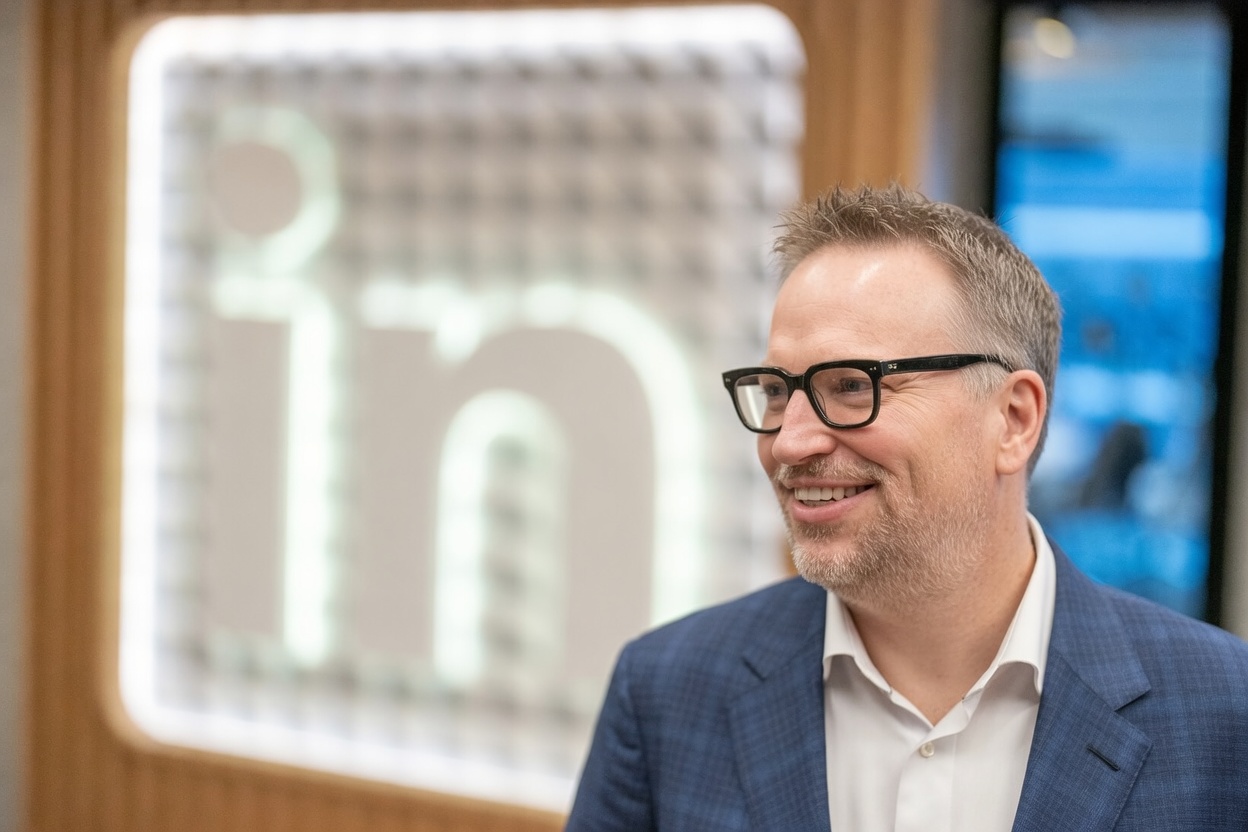
- Ryan Roslansky stepped down as LinkedIn CEO on Wednesday after six years at the helm.
- COO Dan Shapero takes over immediately — he already reported directly to Roslansky.
- LinkedIn grew from 700M members and $8B annual revenue to 1.3B members and $19B under Roslansky.
- Roslansky stays on as EVP at Microsoft, a title he was given last June.
Ryan Roslansky’s Six-Year Run: From Jobs Board to Social Network
Ryan Roslansky joined LinkedIn in 2009 as one of Jeff Weiner’s first hires and spent more than a decade working through nearly every corner of the company before taking the top job in June 2020 — at the height of pandemic-era labor market chaos. He inherited a platform with 700 million members and roughly $8 billion in annual revenue. Six years later, LinkedIn has 1.3 billion members and $19 billion in revenue.
The revenue run is inseparable from the product shift Roslansky accelerated. Under him, LinkedIn moved from a glorified jobs board to something closer to a full-blown social network — executives sharing personal essays, career advice, and the occasional tearful video. The format is widely mocked and wildly effective: it drove the engagement numbers Microsoft’s board cares about.
Dan Shapero Takes Over as LinkedIn CEO
Shapero, who was already Roslansky’s COO, takes over immediately. His reporting line does not change — Shapero continues to report to Roslansky, who remains EVP at Microsoft, a title he was given last June. In practical terms, LinkedIn’s day-to-day leadership shifts to Shapero, while strategy sign-off stays with Roslansky inside Microsoft’s executive ranks.
The continuity is the point. Microsoft acquired LinkedIn in 2016 and has let it operate with unusual independence — a model the Tim Cook-to-John Ternus transition at Apple echoes more loosely. Swapping a sitting COO into the CEO seat is the lowest-risk handoff Microsoft could engineer.
What’s Next for LinkedIn Under Microsoft
Shapero inherits a platform that needs to answer two questions: whether the creator-content layer keeps growing in a brutal tech job market where the product’s traditional use case — posting open roles — is softer than it’s been in 20 years, and how AI gets woven into the recruiting, messaging, and feed surfaces without turning LinkedIn into another ChatGPT wrapper.
Roslansky’s legacy is clear: he took a $26 billion acquisition and turned it into one of Microsoft’s most valuable properties. Shapero’s job is to keep it compounding. For a company that just crossed $19 billion in revenue, “hold your tearful video tributes” — as TechCrunch put it — is the correct energy.