
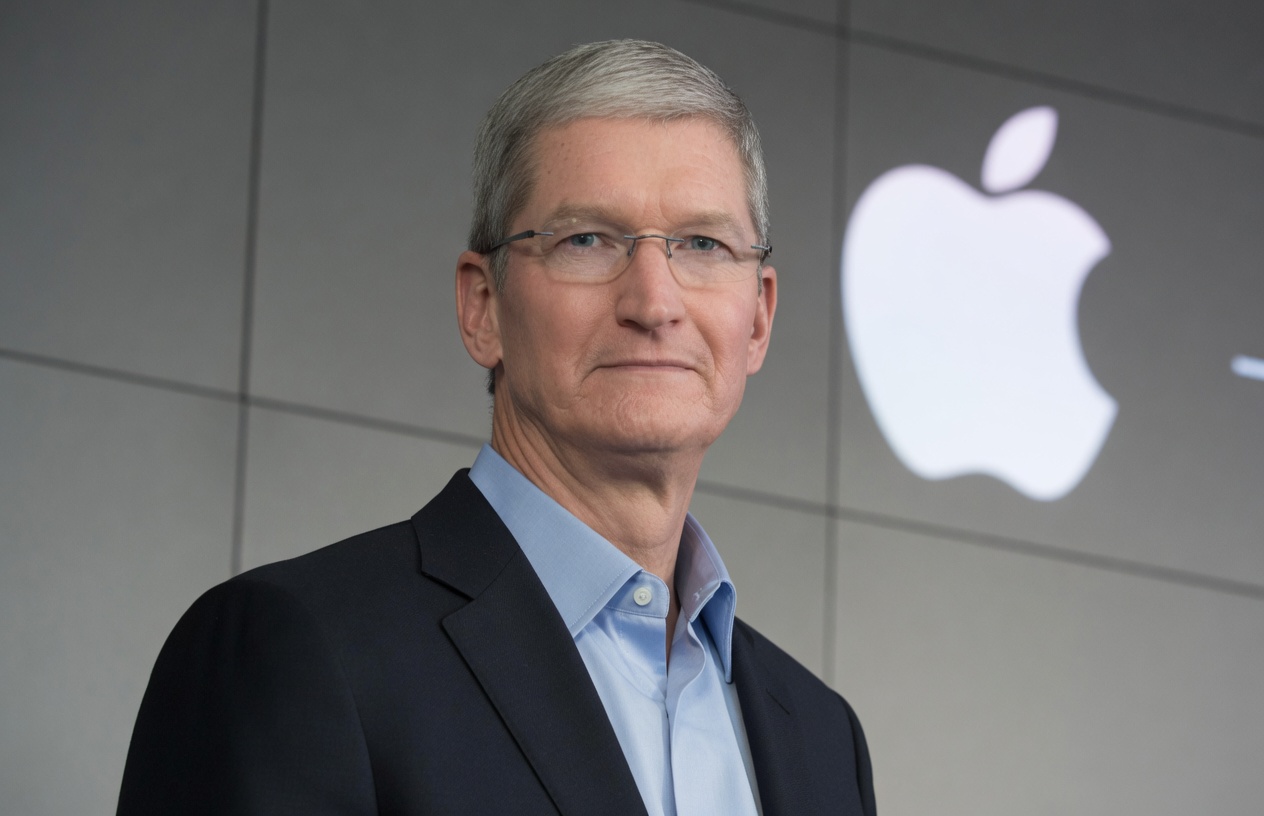
- Tim Cook is stepping down as Apple CEO after 15 years leading the company.
- John Ternus, SVP of hardware engineering, takes over as CEO on September 1, 2026.
- Cook stays on as executive chairman, focused on government and global relationships.
- Apple’s market cap grew from $350 billion to $4 trillion during Cook’s tenure.
- Ternus, 50, led the Mac Intel-to-Apple Silicon transition and last month’s MacBook Neo launch.
- Cook, 65, says he is “healthy” and the timing was right with a strong product roadmap ahead.
Apple announced Monday that Tim Cook is stepping down as CEO after 15 years, ending a tenure that turned the company from a $350 billion hardware maker into a $4 trillion global platform. John Ternus, the 50-year-old senior vice president of hardware engineering, will take over on September 1, 2026. Cook will stay on as executive chairman, focusing on Apple’s relationships with policymakers around the world.
Tim Cook Steps Down as Apple CEO After 15 Years
Cook took over as Apple CEO in 2011, a few months before Steve Jobs’s death, after running day-to-day operations during Jobs’s medical leave. He joined the company in 1998 from Compaq, initially overseeing worldwide sales and operations, and built his reputation as the operations executive who kept Apple’s supply chain humming.
“It has been the greatest privilege of my life to be the CEO of Apple,” Cook said in a press release. At an internal Apple meeting reported by Bloomberg, he told staff he is “healthy,” his “energy is high,” and that he chose now because “the business had to be doing great,” the product roadmap had to be “incredible,” and Ternus had to be “ready for the role.” Cook said he will continue as executive chairman “for a long time” and focus on Apple’s global relationships — including his carefully managed rapport with Donald Trump, to whom he recently gifted a glass plaque made from US supply partners.
Who Is John Ternus, Apple’s New CEO?
Ternus has spent nearly his entire career at Apple. He joined the product design team in 2001, became vice president of hardware engineering in 2013, took the senior VP role in 2021, and has worked on almost every major product Apple has shipped in 25 years — every iPad generation, multiple iPhones, AirPods, and Apple Watch. He most recently led the launch of the MacBook Neo, Apple’s first low-cost MacBook, and oversaw the historic transition of Mac computers from Intel chips to Apple Silicon.
“I am humbled to step into this role, and I promise to lead with the values and vision that have come to define this special place for half a century,” Ternus said in the press release. Speaking at the Apple all-hands, he added: “I am especially excited to be stepping into this role at this moment, because I am telling you we are about to change the world once again.” OpenAI CEO Sam Altman called Cook “a legend” on X and thanked him for “everything he has done.” Cook described Ternus as “a visionary” with “the mind of an engineer, the soul of an innovator and the heart to lead with integrity and honour.”
Cook’s Legacy: A $4 Trillion Apple, but an AI Problem
Under Cook, Apple became the first public company to cross $1 trillion in valuation in 2018, and later the first to cross $4 trillion. Services — Apple Pay, Apple TV+, Apple Music, the App Store — became the second-largest revenue unit behind the iPhone. The Apple Watch and AirPods, both launched on Cook’s watch, turned into multi-billion-dollar product lines. He navigated the company through COVID, Trump’s tariff fights, and multiple antitrust probes, while quietly becoming one of the most influential operators in American business.
But Cook’s final years were shadowed by missteps. The $3,500 Vision Pro headset remains a niche product. Apple scuttled its self-driving car project after reportedly spending $10 billion. And the company has fallen visibly behind on AI — Apple delayed a major Siri update this year meant to catch up with OpenAI’s ChatGPT and Google’s Gemini, forcing analysts to grill Cook on earnings calls about whether Apple is ready for a future beyond the iPhone.
What Changes for Apple Under John Ternus
Naming a hardware-first CEO is a clear signal. Apple is expected to launch the delayed Siri upgrade at WWDC in June and, according to Bloomberg, its first foldable iPhone in September. Dipanjan Chatterjee, principal analyst at Forrester, says Apple “remains structurally dependent on the phone” and Ternus “must resist the temptation of incrementalism that has plagued Apple of late and escape the iPhone’s gravitational pull.”
Wedbush Securities analyst Dan Ives put it more bluntly: “Cook leaves a lasting legacy in Cupertino. And there will be a lot of pressure on Ternus to produce success out of the gates, especially on the AI front.” Cook built the machine. Ternus now has to prove it can still make something nobody expected.
Apple Newsroom | @Apple | @tim_cook | via BBC